Thursday, December 17, 2020

A first attempt at cracking "The Battle of New Orleans"

I've already mentioned that the synchronicity fairies keep bringing the Jimmie Driftwood song "The Battle of New Orleans," as made famous by the Spectacular Johnny Horton in 1959, to my attention in connection with the ongoing electoral circus in America. (Remember "Shadilay"? This is this year's "Shadilay." I'm not sure yet how or why, but it is.)

Here, for a little variety, is the Nitty Gritty Dirt Band version:


I was taught this song in a public elementary school, which goes to show how much times have changed. Can you imagine kids today being taught a song that glorifies gun violence, cruelty to alligators, and so "problematic" a personage as Old Hickory?

Anyway, here's a first stab at an analysis.

First of all, we notice that singer who made the song famous was named Horton. Horton is also a Dr. Seuss character, an elephant, known for his repeated lines, "I meant what I said, and I said what I meant, and an elephant's faithful one hundred percent!" (Johnny Horton had not yet released his first album when Horton Hatches the Egg was published.)

. . . unlike the British at the Battle of New Orleans!

Johnny Horton used to perform the song in a period uniform, holding a musket with a flared mouth like a trumpet.


And now we come to the lyrics themselves.

We fired our guns and the British kept a-comin'
There wasn't as many as there was a while ago
We fired once more and they began to runnin'
On down the Mississippi to the Gulf of Mexico

Fire has more than one meaning, but when Donald Trump says, "You're fired!" he's not talking about artillery. Couldn't "We fired our guns" mean "We terminated the employment of several top-level defense officials"?


"We fired once more and they began to runnin'" could mean, among other things, that the firing of some officials led others to resign of their own accord.

We looked down the river and we see'd the British come
And there must have been a hundred of 'em beatin' on the drum
They stepped so high and they made their bugles ring
We stood behind our cotton bales and didn't say a thing

President Trump has stayed pretty quiet and played his cards close to his chest -- unlike his enemies, who have been beatin' on the drum and making their bugles ring.

Old Hickory said we could take 'em by surprise
If we didn't fire our muskets till we looked 'em in the eye
We held our fire till we see'd their faces well
Then we opened up our squirrel guns and really gave 'em -- Well . . .

To look someone in the eye is to tell him the truth, or to challenge him to tell you the truth.

"We held our fire till we see'd their faces well" means we waited for all our enemies to identify themselves and show their hand before striking.

We fired our cannon till the barrel melted down
So we grabbed an alligator and we fought another round
We filled his head with cannonballs 'n' powdered his behind
And when we touched the powder off, the gator lost his mind

Finding a way to fight another round even after your cannon has melted means continuing to fight even when everyone is saying you've already lost.

An allegator is one who makes allegations. (Alligator is etymologically el lagarto, "the lizard"; I'll let David Icke handle that one!)

Wednesday, December 16, 2020

God and dog at the Panama Canal

I have, as I may have mentioned a few times, been reading Scott Alexander's novel Unsong.

Today I read a bit before dinner and a bit after. When I stopped for dinner, I had just read a reference to the palindrome "A man, a plan, a canal -- Panama," which served as the point of departure for my after-reading train of thought.

I thought of an old friend who had, ages ago, been my partner in crime in coming up with ridiculous anagrams and palindromes and such. One of our running jokes had been to take famous palindromes and deliberately ruin them -- for example, changing "Able was I ere I saw Elba" to "Oolretaw was I ere I saw Waterloo." You sort of had to be there. So I thought, hey, you could replace Panama with Suez and get, oh, I don't know, "Zeus, Lana, candy, a Haydn, a canal -- Suez!" No, not dumb enough. Or too dumb. Anyway, not as funny as Oolretaw.


And that reminded me of a story I had heard as a kid -- supposedly about a friend of a friend but probably just made-up -- about a guy who had named his dog Suez because Zeus is a god and dog is god spelled backwards.

And that made me think of an anecdote from Whitley Strieber's book The Afterlife Revolution.

I was in meditation one afternoon [in 2012] when I saw in my mind's eye a dog I had known in my youth. He was called Quagmire . . . I had not thought of this dog at all since I was a teenager.

When I told Anne about it, she said, "Dog-God. You just had a visit from God."

God? Was she kidding? God was a distant, immeasurable, and awe-inspiring presence. I said, "I'd need some sort of sign if I was going to believe that."

Half an hour later we left on our afternoon walk. And there, parked at the curb in front of our house was a car with the vanity plate QGMIRE. Quagmire. A coincidence, but also too much of one. She said something along the lines of, "He's ready to be your dog even though it's his universe. So lighten up and let it happen." . . .

In our many future conversations about the sacred, Anne always referred not to god but to dog. "Dog's going to be disappointed, Whitley, if you do such and such." Or, "Ask Dog. Dog will help you."

Dog did, and does. Dog's here and he's not going anywhere. But then again, how can he? He's everywhere.

(Incidentally, when Strieber was a boy, he had a dog named Candy -- one of the words in my lame-ass ad-hoc Suez palindrome.)

So that's where my train of associations had taken me -- from a Panama Canal palindrome to praying to "Dog" for help.

Little did I know that Alexander, having presumably taken an entirely different train, would meet me at the station. I picked up Unsong again after dinner and read on. One of the characters, having gotten into a tight spot while sailing through the Panama Canal, finds that (for a very silly reason that need not detain us here) she needs to pray to God backwards as "Dog."

"Okay, Dog," she said. "I haven't always believed in you. I mean, I've always believed in dogs, but . . . no, this is stupid. Listen, if I let you have this piece of meat, will you save me and my friends?"

And an actual dog suddenly appears on her ship, and she and her friends are saved. Never mind the details. "Ask Dog. Dog will help you." Dog did, and does.

How surprising is it that Alexander and I both independently connected "A man, a plan, . . ." with praying to God as "Dog" for help? After all, a palindrome does naturally make one think of words that become other words when reversed, and god/dog is surely one of the best known such pairs. (Did you hear about the agnostic dyslexic insomniac?) Still, for us both to arrive at someone actually praying to Dog -- a coincidence, as Strieber says, but also too much of one.

Note added: In a comment, Bruce Charlton corrects my coincidence to God-incidence. Well, these things are translingual -- Socrates himself used to swear "by the dog" (a very Sirius oath indeed!) -- and coin means "dogs" in both Irish and Scottish Gaelic, so replacing that element with God is singularly appropriate.

God-incidence reflects Bruce's position that synchronicities are the work of God. Regular readers will know that I prefer to attribute them to fairies -- or, as the Irish would say, sídhe.

I mentioned that in Unsong, when Ana prays to "Dog," an actual dog appears on her ship. It is described thus:

It reminded her of those black dogs that ye olde English had viewed as signs of death, the ones that would appear on windswept moors. It looked at her. Its eyes seemed too deep, too intelligent.

The reason the dog seems so uncanny is, of course, that it is actually God. The description suggests, despite the reference to "ye olde English," the faery hounds of Celtic folklore.

This is not a coinsídhence, because nothing is ever a coinsídhence.

Tuesday, December 15, 2020

A skeleton of years ago

The synchronicity fairies have been bringing this old song to my attention a lot lately. I haven't figured out how it fits into the scheme of things, but overall it seems a happy omen.


(Note added: I realize the title of this post is confusing. By "a skeleton of years" I mean 206 years.)

Monday, December 14, 2020

A bit of political prognostication from a correspondent -- plus rhinoceroses!

An email correspondent of mine brought it to my attention some weeks ago that the first of the daily Mass readings for December 14, 2020 (the day the electoral college votes in the U.S.) is from Numbers 24, the story of Balaam being called upon to curse the Israelites but blessing them instead -- the implication being that, if the synchroncity fairies have anything to do with it, the electoral college might similarly "disappoint."

Following the link from the Mass readings website, I read the chapter in the Douay-Rheims version, a translation with which I am not at all familiar. (Mormons are King James readers.) The reading is only vv. 2-7, 15-17a, but I quote some of the context as well.

[1] And when Balaam saw that it pleased the Lord that he should bless Israel. he went not as he had gone before, to seek divination: but setting his face towards the desert,

[2] And lifting up his eyes, he saw Israel abiding in their tents by their tribes: and the spirit of God rushing upon him, 

[3] He took up his parable and said: Balaam the son of Beor hath said: The man hath said, whose eye ire stopped up:

[4] The hearer of the words of God hath said, he that hath beheld the vision of the Almighty, he that falleth, and so his eyes are opened:

[5] How beautiful are thy tabernacles, O Jacob, and thy tents, O Israel!

[6] As woody valleys, as watered gardens near the rivers, as tabernacles which the Lord hath pitched, as cedars by the waterside.

[7] Water shall flow out of his bucket, and his seed shall be in many waters. For Agag his king shall be removed, and his kingdom shall be taken awry.

[8] God hath brought him out of Egypt, whose strength is like to the rhinoceros. They shall devour the nations that are his enemies, and break their bones, and pierce them with arrows.

[9] Lying down he hath slept as a lion, and as a lioness, whom none shall dare to rouse. He that blesseth thee, shall also himself be blessed: he that curseth thee shall be reckoned accursed.

[10] And Balac being angry against Balaam, clapped his hands together and said: I called thee to curse my enemies, and thou on the contrary hast blessed them three times.

[11] Return to thy place. I had determined indeed greatly to honour thee, but the Lord hath deprived thee of the honour designed for thee.

Why have I highlighted the bit about the rhinoceros? It caught my eye partly because of its unfamiliarity -- the King James has unicorn, and I believe the animal intended by the author was the aurochs -- but also because rhinoceroses had been on my mind recently for other reasons.

My recent Robin Hood post begins with a simplification of my actual train of thought. I said the story of Samson and the fiery foxes made me think of the brower Firefox, which in turn made me think of a fox firing an arrow. In fact, I got as far as Firefox and then got stuck. The sync fairies had to bring the Disney Robin Hood movie to my mind by other means.

I was thinking about songs that presage 2020 -- for example, the Beach Boys song "Time To Get Alone," from the 1968 album 20/20, featuring the refrain "Away from the people / And safe from the people." One of the songs I thought of was the 2005 They Might Be Giants song "I Never Go To Work" ("On Monday, I never go to work / On Tuesday, I stay at home . . ."). Besides the obvious 2020 theme of staying home and not going to work, it's also about practicing the trumpet every day and thus connects to Trump. The music video shows the main character staying home and practicing the trumpet in defiance of his boss, who is a rhinoceros.


This made me think of the "rhino guards" in the Disney Robin Hood film, and it was only then that I made the connection between Firefox and a fox firing an arrow.


I haven't seen that movie since I was tiny, but those rhino guards have stuck with me -- so much so that, the first time I saw a red turtle dove, its strange combination of gray and pink made me think of them.

RINO is a widely understood acronym for Republican in Name Only -- used by members of that party as a pejorative for fellow party members with whom they disagree. It predates the Trump era, and has even been applied by the GOP establishment to Trump himself, but it is currently used most often by Trump and his supporters with reference to the anti-Trump wing of the party.


The acronym is an apt one because the rhinoceros, though superficially resembling an elephant, in fact belongs to the same order of mammals (Perissodactyla) as the donkey.

Rhinoceros means "nose-horn" in Greek -- so the abbreviated form rhino is literally just "nose." (The omission of the holy letter H is also significant!) This suggests an additional meaning for the line "Fox sews hose on Slow Joe Crow's nose."


Remember what the Grinch did when he needed a reindeer? He used some thread to attach a big horn to the top of his dog's head.


Well, by the same logic, how would you "make" an elephant? By sewing a hose to some other animal's nose, of course. As discussed before, Fox is the news media and Slow Joe is Slow Joe. "Slow Joe Crow's nose" means nominal Republicans (RINO = rhino = nose) who are in fact on Slow Joe's side rather than Trump's. (A trump is a horn. Rhino is rhinoceros with the part meaning "horn" removed.) The media sews a hose to their nose (yes, the word nose is doing double duty here), presenting them as "real" Republicans.

Having just recently connected Fox in Socks with Men in Tights, I realize that the word hose can also mean "hosiery" -- tights, socks, and such.


Note: The TMBG video ends with the rhino boss agreeing to play the trumpet in spite of himself. Make of that what you will.

Friday, December 11, 2020

Robin Hood

My last post ended with Samson tying firebrands to the tails of foxes, which made me think of the browser Firefox. And this made me think of the other meaning of the word fire.


And that's when I realized that tights are a kind of socks.


I had previously connected Fox in Socks with Joe Biden (see my posts Slow Joe Crow and Lots of new blue goo now), so you can well imagine that it came as something of a shock to suddenly realize that not only is Biden's middle name Robinette, but his two sons are called Beau and Hunter.

Well, shoot! What are the chances of a bull's-eye like that?

All three Biden men are alumni of Archmere Academy. The school's colors are deep ("lincoln"?) green and white, and the school newspaper is called The Green Arch.


Archmere is a Catholic school, and the Bidens are nominally Catholic -- "Mary men," you might say.

Biden's 2020 campaign logo was notable for omitting the letter E, replacing it with speed lines suggesting that the D had zoomed in from somewhere else.


And perhaps Biden thinks of himself as a Robin Hood figure: He knows he's stealing, but he also thinks he's a hero for doing so. I'm referring to the election, of course, but the "Robin Hood" project of stealing from the rich and giving to the poor is also something one associates with the Left.


I have connected Fox in Socks with the Red Sun and with Betelgeuse -- which, it occurred to me, is connected with archery because it is in the constellation Orion the Hunter. It turns out, though, that Orion isn't actually an archer; the part of the constellation that looks like a bow is "officially" either a shield or a lion.

Or both!

However, running a Google image search for betelgeuse archer did turn this up -- from, of all places, the white nationalist site Stormfront.


It's a comment on a thread called "Giant star Betelgeuse (or 'Beetlejuice') is dimming & changing shape." (I have no idea why this astronomical topic was being discussed on a political "hate" site; there is nothing about politics or race or anything in the entire thread.) The comment, posted on February 19 of this year, reads: "If Betelgeuse explodes tomorrow it only means it actually exploded on a day 650 years ago, during the age when England still fought with bows and arrows" -- with, in case the meaning were not clear, a very large picture of some Englishmen doing just that.

It seems a strange thing to zero in on. The point is simply that Betelgeuse is very far away (642.5 light years) and that anything we observe happening to Betelgeuse actually happened hundreds of years ago. Any historical figure or event or outdated technology would have served to make the point, but the poster chose to focus on archery, and specifically archery in England. The 14th century is, of course, around the time the Robin Hood legend began to become popular.

Bringing this all back to the Sun card, note that Robin Hood is classically depicted -- in the Disney film and Men in Tights, for example -- with a large, often red, feather in his cap. The rider on the white horse on the Rider-Waite card wears the same ornament.

Rider, wait!

I have connected this rider with the first horseman of the Apocalypse: "And I saw, and behold a white horse: and he that sat on him had a bow; and a crown was given unto him: and he went forth conquering, and to conquer" (Revelation 6:2).

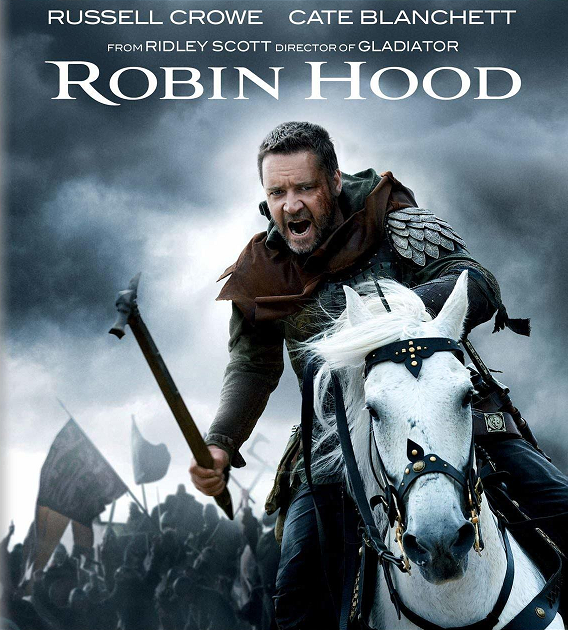
Note added: I'm not sure how I could possibly have missed this before! I've just connected the rider on the white horse with Robin Hood, in part because of the red feather he wears. In my post Red crows of the Sun, I connected that feather with what it says on the tin: legendary red crows associated with the Sun in Chinese folklore. How could it have escaped my notice that there is a Robin Hood movie in which Hood rides a white horse and is played by an actor whose name literally means Red Crow?


Russell means "red." Crowe means "crow." This isn't just a bull's-eye; this is splitting an arrow on the bull's-eye!

(Incidentally, it's really possible to do that. The famed "Robin Hood shot" has been duplicated three times by a kid from South Dakota with the ridiculously appropriate name Mike Merriman.)

Wednesday, December 9, 2020

Crazy like a fox

And he said unto them, Go ye, and tell that fox, . . .

-- Luke 13:32

Who reads Fox in Socks as prophecy? Nobody, that's who! -- said the man of many wiles to the Cyclops.

This will be an even more disjointed post than usual.

Anyone who reads The Magician's Table will know I've been on a Sun kick these days. I got started on it by reading a post by Richard Arrowsmith that mentioned a connection between the Sun card (the 19th trump) and the birdemic (also numbered 19). As I followed the links the synchronicity fairies gave me, I found that I was increasingly focusing on the idea of two contrasting suns -- epitomized by Superman's Red Sun of Krypton and Yellow Sun of Earth.

Today I realized (not until today!) that this is eerily similar to the path that Arrowsmith's own synchromysticism led him down way back in 2009 -- but his "other sun" was identified with Sirius, and Sirius is a blue star.

Arrowsmith's discovery, not mine; each quotation mark is a tiny i.

My other sun, in contrast, is red. Well, if Sirius is the most famous blue star, what's the most famous red one? Of course: Betelgeuse -- a star to which the sync fairies have already tried to draw my attention.

What does Betelgeuse have to do with Fox in Socks? Well, when beetles battle beetles in a puddle paddle battle and the beetle battle puddle is a puddle in a bottle…


... couldn't we say that this liquid full of beetles is now a bottle of beetle juice?

Incidentally, notice that there are four of these beetles and that, given the way they are beating each other with paddles, they might well be called beatles. As Fox in Socks was published in 1965, just a year after the most famous episode of the Ed Sullivan show, this is unlikely to be a coincidence.

The 6-by-6 magic square, traditionally associated with the Sun, adds up to 666. Rudolf Steiner created the name Sorath -- his "demon of the sun" -- so as to add up to 666 in Hebrew gematria. In the Hebrew system, the first nine letters correspond to the numbers 1-9, the next nine to the numbers 10-90, and the remaining four (for Hebrew lacks the 27 letters needed for a complete system) to the numbers 100-400. Thus, the 6th letter (vav) has a value of 6, and the 15th (samekh) has a value of 60. The 24th letter would be 600, but Hebrew only has 22 letters, so Steiner uses resh (200) and tav (400). He puts those four letters together to make Sorath (samekh-vav-resh-tav).

What if the same system were applied to English? Since the English alphabet is longer than the Hebrew, only three letters are necessary to make 666 -- and those three letters are FOX.


Fox is the English equivalent of Sorath, each being the shortest possible way of expressing 666 in its respective language.

Sorath, the sun-demon whose number is 666, obviously corresponds not to the Yellow Sun of Earth but to the Red Sun of Krypton. (The atomic number of krypton is 36, linking it to the 6-by-6 square.) We have tentatively connected this Red Sun with the star Betelgeuse.

The Fox in Fox in Socks is red, and the story ends with his being unceremoniously shoved into the beetle juice.


The juxtaposition of the Red Sun with blue beetles would have seemed perfectly natural to King Tut, whose pectoral shows just that combination.


And while Seuss must certainly have known of the Beatles when he wrote Fox in Socks, he could not have known of this particular record, released at a much later date in Mexico.

I don't remember "Pigguies"; do you?

"Here comes the sun!" say the four blue beetles as the red fox is pushed into their bottle.

If Fox is the Red Sun, his nemesis Knox -- who is yellow, and whose name recalls the proverbial "more gold than Fort Knox" -- is the Yellow Sun. This true Sun is Shamash -- for whom Samson was named. Samson, like Knox, caught foxes.

And Samson went and caught three hundred foxes, and took firebrands, and turned tail to tail, and put a firebrand in the midst between two tails.

And when he had set the brands on fire, he let them go into the standing corn of the Philistines, and burnt up both the shocks, and also the standing corn, with the vineyards and olives.

-- Judges 15:4-5

These fire-spreading foxes reinforce the identification of the fox with the sun. This is further strengthened if we look at the numbers involved: 300 foxes, 150 firebrands. Using the same system that told us FOX = 666, we can see that 300 corresponds to U, and 150 to SN.


(Cross-posted at The Magician's Table, despite its negligible Tarot content, due to its connection to themes discussed there.)

Monday, December 7, 2020

Red Sun, Yellow Sun

More solar ramblings at The Magician's Table -- with special guest appearances by the prophet Lehi and the Tupperware company.

Popular posts