Tuesday, May 4, 2021

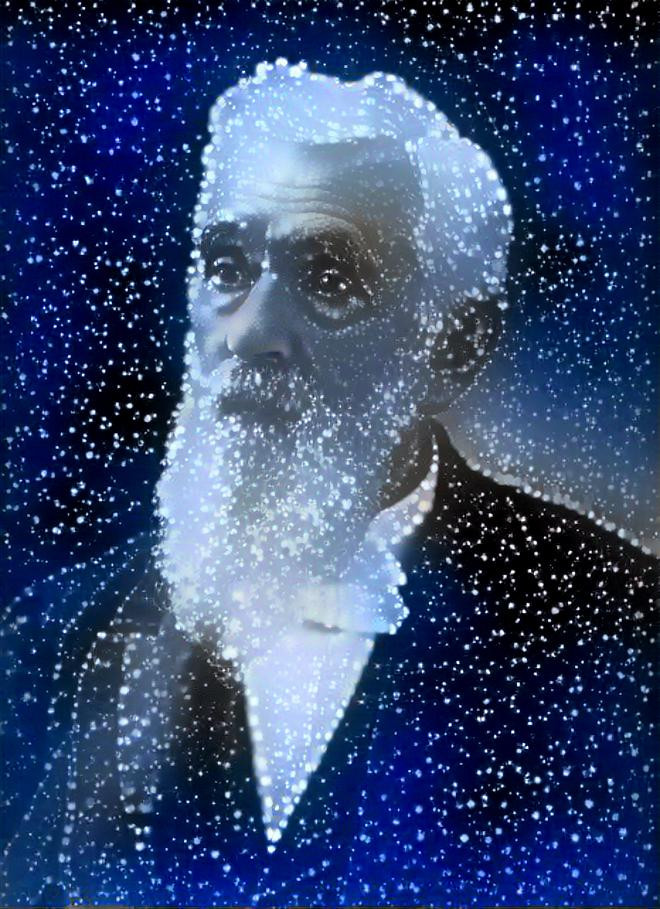
Snow Snow, and more Snow!

I mentioned in this post that the movies 50/50 and The Adventures of Tintin were released within a month of each other in 2011. (The atomic number of tin is 50, so a double 50 is the same as a double tin.) Less than a year later, the movie Lockout was released, in which the Guy Pearce character Marion Snow tells someone that his first name is also Snow, leading her to say, "Your name is Snow Snow?" The name Snow Snow is connected to Tintin because the chemical symbol of tin is Sn, and because Tintin's dog is named Snowy.

I had previously connected Tintin with Lorenzo Snow, and specifically with the 1963 Mormon film The Windows of Heaven, in which Snow travels to St. George, Utah, to tell the people there that if they will pay more tithing God will make it rain and end the drought from which they have been suffering.

The Windows of Heaven had a running time of 50 minutes, the number of tin. In the 1979 video version, it was cut down to 32 minutes. This is the number of germanium (Ge), directly above tin (Sn) on the periodic table. If there is a double-tin in the name Snow Snow, there is also a double-germanium in the name George.

Lorenzo Snow died on October 10 -- ten ten. St. George is informally referred to by Utahns as "Dixie" because it is in the southern part of the state -- as for example in this dialogue from The Windows of Heaven.

Gibbs: Oh, by the way, that's certainly a terrible drought they're having in St. George. Driest season in many years, according to reports. I do hope you don't dry up and blow away down there, President!

Snow: You ought to know me better than that, George. It takes more than a little Dixie hot air to melt this Snow!

Dixie is from dix, the French word for "ten." In the real Dixie -- the southeastern United States -- the words ten and tin are homophones. The Windows of Heaven is about tithing -- the payment of one-tenth of one's income to the church. Oh, and since we're doing this periodic table stuff, 10 is the atomic number of Neon (Ne).

(In the Gadianton Canyon Incident -- which occurred near Modena, to which Snow travels by train in The Windows of Heaven -- the first thing that tips the girls off to the fact that they may be in another world is a neon sign in an unfamiliar script.)

Lorenzo is a Spanish or Italian name. (Apparently, these random ethnic names were just a thing at that time. Joseph Smith had a brother named Don Carlos.) How do you say snow -- or let's make it snow snow -- in those languages? Spanish is nevar nevar; Italian is neve neve. Both conceal a double-neon, corresponding to 10/10, the date of Lorenzo Snow's death.

In both Spanish and Italian, "snow snow" is very similar to the English Never Never. This term for the remoter parts of the Australian Outback was popularized by Barcroft Boake's poem "Where the Dead Men Lie," which begins thus:

Out on the wastes of the Never Never --
That's where the dead men lie!
There where the heat-waves dance for ever --
That's where the dead men lie!

Here are some more lines from the same poem.

Ask, too, the never-sleeping drover:
He sees the dead pass by;
Hearing them call to their friends -- the plover,
Hearing the dead men cry;
Seeing their faces stealing, stealing,
Hearing their laughter pealing, pealing,
Watching their grey forms wheeling, wheeling
Round where the cattle lie!

Strangled by thirst and fierce privation --
That's how the dead men die!
Out on Moneygrub's farthest station --
That's how the dead men die!

It is perhaps not very charitable to apply this to The Windows of Heaven, but the film does show Lorenzo Snow traveling out to his "farthest station" -- a Mormon settlement quite remote from Salt Lake -- on the "money-grubbing" mission of getting people to pay more tithing. Quoting Malachi, he accuses those who do not pay a full tithe of "robbing God" ("stealing, stealing"). St. George was experiencing a severe drought, "strangled by thirst," and in the film Snow sees a dead cow lying on the ground ("round where the cattle lie") en route from Modena to St. George.

As for the word "drover," for me it has only one association: the film The Man from Snowy River -- based on another famous Australian poem.

Never Never Land is also the abode of Peter Pan, Tinker Bell, and Captain Hook. I have already discussed the synchronistic relevance of Tinker Bell (tinker = worker in tin) and of Captain Hook and his crocodile. Peter Pan also suggests Tin Pan Alley. 

French Christmas carols: Not as innocent as you may think!

Monday, May 3, 2021

Weather prophet

Lorenzo Snow:


Lorenzo Rain:


Lorenzo Partly Cloudy:

Rows and rows of blades and blades

Looking for "The Windows of Heaven" led me to a YouTube channel called "Hard-to-Find Mormon Videos" -- and I thought, could it be possible? Might they have uploaded "That Which Was Lost"? And they have!

I've periodically scoured the Internet for this extremely quotable video for years, but always in vain. Now, at long last, here it is: the Mormon take on the hippies, from 1969.

Droughts in Texas and St. George

The currently active synchronicity-stream began when I happened to think of "The Windows of Heaven," a Mormon movie in which Lorenzo Snow tells the people of St. George, Utah, that they must pay tithing to end a drought. Three days earlier, I had posted about the Bloodhound Gang song "The Bad Touch," which begins with these lines:

Sweat, baby, sweat, baby
Sex is a Texas drought

A few days later, I watched a video about the Gadianton Canyon Incident, which repeatedly referred to the city of St. George and also seemed to reference the Bloodhound Gang song "Uhn Tiss Uhn Tiss Uhn Tiss."

The web of syncs expanded to include various other things, including crocodiles and several movies released in 2011. Serhei commented, "The crocodile bits jumped out at me as the prior day I'd just read Shelley's 'Mask of Anarchy,'" and quoted the lines where "Hypocrisy / On a crocodile rode by." I noted that the "Mask of Anarchy" also says of Murder "Seven blood-hounds followed him" -- linking back to the Bloodhound Gang.

Yesterday I checked the Anonymous Conservative blog, as I do most days. One of the items was "Texas farmers say 2021 drought already rivals 2011 drought." Clicking the link I found that the drought was not confined to Texas; the map showed that St. George, Utah, was also in the area marked "D4 Exceptional Drought." So that's the Bloodhound Gang's "Texas drought," the St. George drought of "The Windows of Heaven," and the year 2011, all in one headline!

Sunday, May 2, 2021

Retracing the development of the Luciferic/Ahrimanic/Ahuric/Devic model

Traditional thinking before Aristotle had virtue sets with only two members: a virtue and its opposite. The recognition of such opposites as hot/cold, big/small, brave/cowardly, etc. must be as old as thought itself. The first (implicit) steps into the realm of virtue theory came with the realization that, for many of these pairs of opposites, one member of the pair could be called a "virtue" and the other a "vice," and that virtue as such had a single unifying character. This must have been the point of all the couplets in the Book of Proverbs (and their equivalents in the Confucian literature) that take the form "The wise/righteous man does X, but the foolish/wicked man does Y" -- observations that strike us as obvious and trite today but must have represented an emerging awareness that all these different qualities we now call "virtues" were characteristic of a particular sort of man; and their opposites, of another sort.

Aristotle's key insight was that each virtue has two corresponding vices -- a vice of deficiency and a vice of excess, with the virtue conceptualized as a mean between the two. This table of Aristotelian virtue sets is adapted from Hugh Tredennick's appendix to his revision of J. A. K. Thomson's translation of The Nicomachean Ethics. I have numbered the sets for ease of reference.


But Aristotle's insight was incomplete in two ways. First, it lost sight of the unifying "types of men" recognized by Solomon and Confucius. That is, it paints a coherent picture of the virtuous man -- the sage or "superior man" of Confucius, the wise and righteous man of Proverbs -- but not of the vicious man, the wicked, the fool. Or, rather, of the two different kinds of wicked fools that would seem to be implied by the Aristotelian theory. Aristotelian virtue is a single coherent whole, but vice-of-deficiency and vice-of-excess are not. For example, a quick glance at the chart above shows that rashness and shyness are both listed as vices of excess. Obviously, there is no human archetype to which this list of vices corresponds.

If we are able to pick one vice from each set based on how well it fits, though, without regard for whether it is classified as a "deficiency" or an "excess," we can in fact create two coherent lists characterizing two different types of bad men. Aristotle never noticed this. Nietzsche got part of the way there in his Genealogy of Morals, where he distinguished between Gut-und-Böse morality and Gut-und-Schlecht morality, but he failed to realize that his Böse ("evil") and Schlecht ("bad") really were two different ways of being bad -- both bad -- and that good was something else entirely. For Nietzsche, there were really only two sorts of men: the sort called evil by those who opposed them, and the sort called bad; each of course called himself good. For Nietzsche, you had to choose between calling Böse good (as Nietzsche himself attempted to do) and calling Schlecht good (as he accused Christians of doing). Nietzsche recognized the unity of Böse and the unity of Schlecht, and in this way was more advanced than Aristotle -- but he lost sight of virtue itself!

It fell to Rudolf Steiner to unify the insights of Aristotle and Nietzsche. Like Aristotle, he recognized virtue (as typified by the Christ) as a middle way between two sorts of vice. But rather than characterizing these as "deficiency" and "excess," he classified the vices into two coherent types of evil: Luciferic (Nietzsche's Böse) and Ahrimanic (Nietzsche's Schlecht). This was a major step forward.

Coming back to Aristotle, though, I said that his insight was incomplete in two ways. Look back at the first virtue set on our table. The virtue is courage, its deficiency is cowardice, and its excess is rashness. So far so good. Now look at the second set. The virtue is temperance, its deficiency is insensibility, and its excess is licentiousness -- wait, what? Surely these are backwards! Licentiousness (eating, drinking, and being merry) is not an "excess" of temperance but a lack of it. One might call a rash fool "too brave," but no one would ever call a glutton or drunkard "too temperate"! It is the other vice, insensibility (measuring out one's life with coffee spoons), that we would call an excess of temperance.

I'm not sure if this mistake (and the similar one in set 7, where irascibility is called an excess of patience) is Aristotle's own or Treddenick's, and I don't really feel like poring over the Ethics to find out, but that's not really the point. The point is how very easy it is to make this sort of mistake when thinking about virtue within the Aristotelian framework. Licentiousness very obviously is an excess of something -- just not an excess of temperance. Licentiousness is a deficiency of temperance and an excess of something else; insensibility is an excess of temperance and a deficiency of something else. And this "something else," this complementary virtue to temperance (we could call it "enjoyment" or something), is what is missing from Aristotle's model.

A proper virtue set has four members: two complementary vices (as in Aristotle), and two complementary virtues. This was discovered and published on the Junior Ganymede blog by the anonymous blogger who chooses to be known only by the letter G. Here is his model as applied to the first of Aristotle's virtue sets -- filling in the missing virtue of prudence.


However, G, like Aristotle, considered each virtue set in isolation, failing to notice that by looking at many such sets one could identify two coherent types of evil and two coherent types of good. In the set shown above, for example, rashness is clearly Böse/Luciferic, and cowardice is Schlecht/Ahrimanic; and a similar classification is possible for every single Ganymede virtue set. Steiner had already provided names for these two types of evil, but it fell to me to coin names for the two types of good: Ahuric and Devic.


Only later did I realize the correspondence between Ahuric/Devic and male/female. By simply exploring these models of good and evil, without thinking of sexual identity at all, I had inadvertently arrived at a possible explanation for the eternal nature of sexual identity -- the necessity that good be expressed in two complementary forms rather than in a single asexual Supergod.

Saturday, May 1, 2021

Crack vs. menthol

White junkies prefer powder cocaine. Black junkies prefer crack. For a long time, crack-related crimes were punished much more harshly than their powder-related counterparts -- until it was noticed that this was totally racist. In 2010, President Obama announced that this "longstanding wrong," one of the many "structural inequalities that have held so many of our fellow citizens back," was being righted -- a belated recognition of the inalienable right of all people, regardless of race, to use the type of cocaine they prefer without fear of discriminatory treatment.

White smokers prefer smoke-flavored cigarettes. Black smokers prefer menthol. For a long time, both were freely available to paying customers over the age of 18 -- until it was noticed that this, too, was totally racist. This year, Antipresident Biden announced that, in a compassionate effort to "address health disparities experienced by communities of color," the type of cigarettes black people like would be banned, while the type white people like would continue to be freely available.

I don't have anything to say about this. Just juxtaposin'.

Popular posts