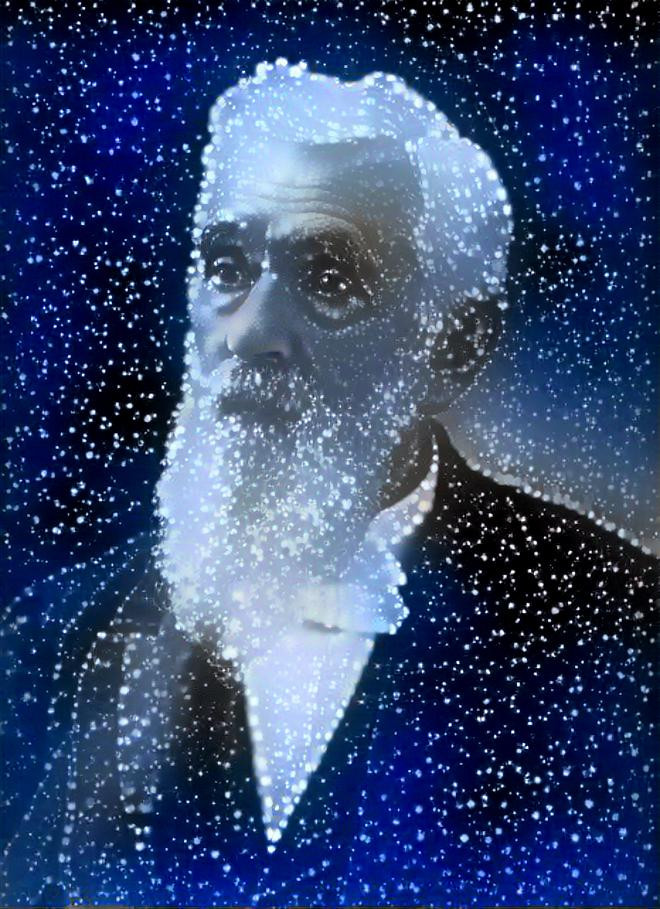
Showing posts with label Lorenzo Snow. Show all posts

Tuesday, September 19, 2023

The Stadium Arcadium covers

On September 11, I received an email from a sporadic correspondent who wishes to be anonymous. Among the things it mentioned was that Storm Thorgerson, who did the cover art for the Muse album Black Holes and Revelations, "did some other synchy (and famous) album art."

This sent me to Thorgerson's Wikipedia page, where I found that he designed the iconic Dark Side of the Moon cover for Pink Floyd. Scrolling through a list of other album covers he had designed, I found a few that had been in the sync stream before (Ween's The Mollusk, for example), but the entry that jumped out at me was this one:

  • Red Hot Chili Peppers
    • Stadium Arcadium (2006) (unused)

The last time I had received an email from this person, which was in May, I noticed that my correspondent's pseudonym and real name were linked to Lorenzo Snow (an old sync theme) by both gematria and etymology. This is what I was referring to when I wrote this in my May 8 post "Random Syncs: Ace of Swords, 1320."

I had recently been brooding over the Ace of Swords, the Marseille version, which features a red sword passing through a crown, and at the same time had (again!) been experiencing some synchronicities related to the name Lorenzo Snow. These latter had made me think of various other things with snow in their name. I listened to that Red Hot Chili Peppers song, and then I thought of the novel Snow Crash, which I read back in 2001.

In this post, and in the same-day follow up "Crowns, martyrs, and Mithras," I noted connections between the Marseille Ace of Swords, the cover of Neal Stephenson's Snow Crash, and Joan of Arc's coat of arms.


The Ace shows an upright red-bladed sword passing through a crown from which hang a laurel branch (etymologically related to Lorenzo) and a palm frond; colorful bits of flame fill the background. The Snow Crash cover shows an upright red sword passing through both the name Stephen (meaning "crown") and the anagram CRNOW, as well as the word Snow; colorful dots fill the background. The sword also passes through ARC spelled backwards.

As mentioned above, Lorenzo Snow made me first think of the Red Hot Chili Peppers song "Snow (Hey Oh)," which I listened to, after which I moved on to Snow Crash. I've never been a big RHCP fan and don't know their music very well, so it wasn't until June 29 that I found out what album "Snow" is from: Stadium Arcadium.


There's no sword here, but there's a crown-like ring around the album title, and if you remove the repeated -adium element, what's left is St. Arc.

Going back to Storm Thorgerson's unused cover ideas for Stadium Arcadium, it turns out that he submitted three of them. Here are two:


Four rivers meeting at a central point, where a tree grows, and an eaten apple -- clear Garden of Eden symbolism. I am currently reading William Fairfield Warren's Paradise Found, which argues that Eden was located at the North Pole. Here's part of the table of contents.


Here's Mercator's famous map of the Arctic:


The third proposed Stadium Arcadium cover has no Eden symbolism but turned out to be the synchiest of all:


In the very same email that had mentioned Thorgerson's album art, my correspondent included a screenshot of a glitching video game in which only half of the character's body was sticking up from the ground:


The character even has a Scandinavian name, like Storm Thorgerson.

Tuesday, May 4, 2021

"The Windows of Heaven" is fiction

As you know, I've been a bit obsessed with the 1963 Mormon movie The Windows of Heaven lately. Here's the story in brief:

The Church is deeply in debt, and President Lorenzo Snow suddenly feels that the Lord wants him to travel to the city of St. George, though he does not know why. When he arrives, he begins preaching in the church, still not knowing why he has been called there or what he is to say. Suddenly, he is inspired to preach on the importance of paying a full tithe. St. George has been suffering from a devastating drought, and Snow promises that if the people will pay a full tithe, God will make it rain. He instructs them to plant their fields, promising that the drought will end and they will have a harvest "this very season." Trusting that Snow is a prophet, the people follow these instructions, but months go by with no rain in sight. Both the people and prophet are troubled but do not lose faith -- and, a few months after Snow's visit to St. George, it rains and the drought finally ends.

And this is from the conclusion to E. Jay Bell's article "The Windows of Heaven Revisited: The 1899 Tithing Reformation" in the Journal of Mormon History Vol. 20, No. 1, 1994.

What can be said, in summary, about the strong image prevalent in the minds of many members that a renewed emphasis on tithing began in a historical event: Lorenzo Snow's prophetic promise to the struggling Saints in St. George that the windows of heaven would open metaphorically in blessing and literally in breaking the drought if they would pay their tithing? The evidence is conclusive that Lorenzo Snow indeed received a revelation about the importance of renewed emphasis on tithing and made inspired promises churchwide about the continued existence of the Church if the Saints of his day would obey this principle.

However, despite numerous opportunities to remind the people that it would rain if they paid their tithing and despite great motivation to do so until drought cycle broke in 1902, neither the ecclesiastical leaders in St. George Stake nor General Authorities made such reminders. Available contemporary evidence, including LeRoy Snow's own accounts, provide no evidence of such a promise, yet it was LeRoy's triple accounts, published some thirty-five years after witnessing the event, which created the link between rain and tithing. Perhaps his memory was faulty and he did not consult his own records; or perhaps a fuller account lies in records not yet available to researchers..

So Lorenzo Snow did not promise that the drought would end if people paid tithing, and the drought did not in fact end until a year after Snow's death and three years after his visit to St. George.

What's left of the story, then? The Church was in debt, Snow traveled around preaching tithing, people paid more tithing, and the Church got out of debt. Not much drama in that! Overall, though, I'm a bit relieved that the film, with its offensive quid-pro-quo premise, is only a work of fiction.

I am a firm believer in the reality of miracles. Nevertheless, the story of The Windows of Heaven is a reminder of how easily "miracles" can work their way into a narrative, even in cases where there is apparently no conscious desire to deceive.

Snow Snow, and more Snow!

I mentioned in this post that the movies 50/50 and The Adventures of Tintin were released within a month of each other in 2011. (The atomic number of tin is 50, so a double 50 is the same as a double tin.) Less than a year later, the movie Lockout was released, in which the Guy Pearce character Marion Snow tells someone that his first name is also Snow, leading her to say, "Your name is Snow Snow?" The name Snow Snow is connected to Tintin because the chemical symbol of tin is Sn, and because Tintin's dog is named Snowy.

I had previously connected Tintin with Lorenzo Snow, and specifically with the 1963 Mormon film The Windows of Heaven, in which Snow travels to St. George, Utah, to tell the people there that if they will pay more tithing God will make it rain and end the drought from which they have been suffering.

The Windows of Heaven had a running time of 50 minutes, the number of tin. In the 1979 video version, it was cut down to 32 minutes. This is the number of germanium (Ge), directly above tin (Sn) on the periodic table. If there is a double-tin in the name Snow Snow, there is also a double-germanium in the name George.

Lorenzo Snow died on October 10 -- ten ten. St. George is informally referred to by Utahns as "Dixie" because it is in the southern part of the state -- as for example in this dialogue from The Windows of Heaven.

Gibbs: Oh, by the way, that's certainly a terrible drought they're having in St. George. Driest season in many years, according to reports. I do hope you don't dry up and blow away down there, President!

Snow: You ought to know me better than that, George. It takes more than a little Dixie hot air to melt this Snow!

Dixie is from dix, the French word for "ten." In the real Dixie -- the southeastern United States -- the words ten and tin are homophones. The Windows of Heaven is about tithing -- the payment of one-tenth of one's income to the church. Oh, and since we're doing this periodic table stuff, 10 is the atomic number of Neon (Ne).

(In the Gadianton Canyon Incident -- which occurred near Modena, to which Snow travels by train in The Windows of Heaven -- the first thing that tips the girls off to the fact that they may be in another world is a neon sign in an unfamiliar script.)

Lorenzo is a Spanish or Italian name. (Apparently, these random ethnic names were just a thing at that time. Joseph Smith had a brother named Don Carlos.) How do you say snow -- or let's make it snow snow -- in those languages? Spanish is nevar nevar; Italian is neve neve. Both conceal a double-neon, corresponding to 10/10, the date of Lorenzo Snow's death.

In both Spanish and Italian, "snow snow" is very similar to the English Never Never. This term for the remoter parts of the Australian Outback was popularized by Barcroft Boake's poem "Where the Dead Men Lie," which begins thus:

Out on the wastes of the Never Never --
That's where the dead men lie!
There where the heat-waves dance for ever --
That's where the dead men lie!

Here are some more lines from the same poem.

Ask, too, the never-sleeping drover:
He sees the dead pass by;
Hearing them call to their friends -- the plover,
Hearing the dead men cry;
Seeing their faces stealing, stealing,
Hearing their laughter pealing, pealing,
Watching their grey forms wheeling, wheeling
Round where the cattle lie!

Strangled by thirst and fierce privation --
That's how the dead men die!
Out on Moneygrub's farthest station --
That's how the dead men die!

It is perhaps not very charitable to apply this to The Windows of Heaven, but the film does show Lorenzo Snow traveling out to his "farthest station" -- a Mormon settlement quite remote from Salt Lake -- on the "money-grubbing" mission of getting people to pay more tithing. Quoting Malachi, he accuses those who do not pay a full tithe of "robbing God" ("stealing, stealing"). St. George was experiencing a severe drought, "strangled by thirst," and in the film Snow sees a dead cow lying on the ground ("round where the cattle lie") en route from Modena to St. George.

As for the word "drover," for me it has only one association: the film The Man from Snowy River -- based on another famous Australian poem.

Never Never Land is also the abode of Peter Pan, Tinker Bell, and Captain Hook. I have already discussed the synchronistic relevance of Tinker Bell (tinker = worker in tin) and of Captain Hook and his crocodile. Peter Pan also suggests Tin Pan Alley. 

Monday, May 3, 2021

Weather prophet

Lorenzo Snow:


Lorenzo Rain:


Lorenzo Partly Cloudy:

Droughts in Texas and St. George

The currently active synchronicity-stream began when I happened to think of "The Windows of Heaven," a Mormon movie in which Lorenzo Snow tells the people of St. George, Utah, that they must pay tithing to end a drought. Three days earlier, I had posted about the Bloodhound Gang song "The Bad Touch," which begins with these lines:

Sweat, baby, sweat, baby
Sex is a Texas drought

A few days later, I watched a video about the Gadianton Canyon Incident, which repeatedly referred to the city of St. George and also seemed to reference the Bloodhound Gang song "Uhn Tiss Uhn Tiss Uhn Tiss."

The web of syncs expanded to include various other things, including crocodiles and several movies released in 2011. Serhei commented, "The crocodile bits jumped out at me as the prior day I'd just read Shelley's 'Mask of Anarchy,'" and quoted the lines where "Hypocrisy / On a crocodile rode by." I noted that the "Mask of Anarchy" also says of Murder "Seven blood-hounds followed him" -- linking back to the Bloodhound Gang.

Yesterday I checked the Anonymous Conservative blog, as I do most days. One of the items was "Texas farmers say 2021 drought already rivals 2011 drought." Clicking the link I found that the drought was not confined to Texas; the map showed that St. George, Utah, was also in the area marked "D4 Exceptional Drought." So that's the Bloodhound Gang's "Texas drought," the St. George drought of "The Windows of Heaven," and the year 2011, all in one headline!

Tuesday, April 27, 2021

Tintin, St. George, and, uh, lots of other things!


In my last post, I connected Tintin saying "Hip-hip-hooray!" in Prisoners of the Sun with Terence McKenna's line, "The gnomes have learned a new way to say hooray."


What does Tintin have to do with gnomes, though? Well, the name Tintin suggests the element tin, atomic number 50. Back in 2011, synchromystics took note of the fact that the movie Adventures of Tintin was released less than a month after a movie called 50/50.


(Marvel's first Thor movie was also released in 2011. Thor is considered in the interpretatio graeca to be the equivalent of the Greek god Zeus, the Roman god Jupiter, and the Etruscan god Tin. The metal tin is also associated in astrology and alchemy with the planet Jupiter. Thor the superhero was created by Stan Lee, whose name also suggests tin.)

The next year, 2012, saw the release of Lockout, starring Guy Pearce as a CIA operative named Marion Snow.

Emilie: What's your name?

Snow: Snow.

Emilie: Snow?

Snow: Yeah. Or Sir. You can decide.

Emilie: What's your first name?

Snow: Snow.

Emilie: Your name is Snow Snow? Well, that's just ridiculous! Why won't you tell me your name?

50/50. Tintin. Snow Snow. Sn is tin, of course, and Snowy is Tintin's dog.

A worker in tin is called a tinker, and that's where the gnome connection comes in. Back in 1987, a new playable race was introduced into Dungeons and Dragons: the tinker gnome.


(That "nasal voice" bit even ties in with Terence McKenna!)

Tinkers learning a new way to say hooray is a positive development, since the exclamation more usually associated with tinkers is damn.

The book that introduced tinker gnomes had the very St. George-esque title Dragonlance Adventures.


The "2021" in the upper right-hand corner of the book cover is not a year (the book was published in 1987) but a serial number -- D&D book #2021. The fact that it matches the current year is a coincidence. Notice also that the letter O in the title is stylized as ☉, the astrological symbol for the Sun.

The name of Tintin's dog (in English) is Snowy (one of the Weather Dogs!) -- a link to Lorenzo Snow and thus to St. George. (Incidentally, Lorenzo Snow was born in 1814 and became President of the Church in 1898 -- both of which are Years of the Dog on the Chinese calendar.) Commenter Mr. Andrew informed me of another dog-name connection: On April 20, just three days before St. George's Day, Owen Benjamin did a livestream, and one of the topics was "George fights a dragon." In the title graphic below, that phrase is even followed by a +, suggesting the sign of the Redcrosse Knight.


Mr. Andrew explained, "Owen's dog is named George (really) - and the dragon reference was just a kite. Has absolutely nothing to do w/ St. George (Catholic or Floyd variety) - just a little coincidence/synchronicity at the same time."

Thinking about dog names, I realized that Snowy begins with Sn, the symbol for tin. Then I remembered that there was a famous dog named Rin Tin Tin -- whose name is so similar to Tintin that Wikipedia is afraid people might confuse the two.


The Wikipedia article on Rin Tin Tin has pictures of seven movie posters featuring that dog. The second of them has a "snowy" theme. (The plural, "snows," suggests "Snow Snow" and the two Snows -- Lorenzo and Erastus -- for whom Snow College is named.)

And the third shows Rin Tin Tin wearing the Cross of St. George -- tying in with Owen Benjamin's dog named George who "fought a dragon."


My late uncle Mike was an amateur singer/songwriter and guitarist, and near the end of his life he put together a CD called George: Twenty Years in the Making -- a reference to the first song he wrote as a child, which was about a dog named George who could dance on his hind legs. It begins thus:

Got a dog, his name is George
He followed me home from school
He's the coolest dog in this whole world
'Cos he dances like a fool

What kind of dog dances on his hind legs "like a fool"? A snowy one, of course!


(Note that in this post I connected the Rider-Waite Fool card with George W. Bush.)

Which brings us to alligators. (I know, I know, you've been thinking, "When's he going to get to the alligators?" Don't worry, here they come!)

Fun fact: Not only do some Tarot decks feature a crocodile on the Fool card; certain French esotericists went so far as to name the card Le Crocodile!


According to David McCann (hmm, can = tin, right?) in this interesting thread, "The idea comes from Paul Christian, who actually called the card The Crocodile: 'The crocodile is the emblem of implacable fate and inevitable expiation.'" This fits in with our theme of "inevitable miracles."

The thread I've just linked to also contains some discussion of the crocodile's role in Punch and Judy shows and in Peter Pan. A user called Mallah writes, "I also think of Captain Hook's fear of the Crocodile with a ticking clock within. Time comes to swallow him up...his time has come."

Speaking of Peter Pan, a "tinker" is specifically an intinerant tinsmith, one who would have traveled around with a knapsack like the Tarot Fool -- so what is the Fool wearing on his clothes if not tinker bells?


Also, isn't Captain Hook a bit reminiscent of Captain Haddock? (Besides the phonetic similarity, there is the obvious relationship between hooks and fish.) In Prisoners of the Sun, Tintin rescues Captain Haddock from an alligator -- right after the Captain says of alligators, "They don't fool me"!


I have mentioned (here) the email I received mentioning St. George in the same breath as "DMT entities." In my reply, I wrote:

I once read a paper on DMT experiences, of which the only thing I remember is the (admittedly memorable!) line, "Ken experienced anal rape by alien alligators, and dropped out after his high dose."

When I wrote above that "synchromystics took note of" the connection between 50/50 and Tintin in 2011, I was thinking of the blog g8ors.blogspot.com ("gators"), though I haven't been able to track down the exact post.

The alligator also ties us back into a sync theme from a few months back: the Jimmy Driftwood song "Battle of New Orleans," which humorously describes Andrew Jackson's forces using an alligator as a cannon. (The line "the gator lost his mind" also ties into the Fool/crocodile connection.) Although the Battle of New Orleans took place in early 1815, the song "Battle of New Orleans" begins "In 1814 we took a little trip." The phrase "took a little trip" is a nod to the DMT/Terence McKenna theme, and 1814 is the birth year of Lorenzo Snow.

Since the Tarot has come up, I should also mention that St. George's cross is featured on the Judgment card, which I have discussed extensively as a prophecy of Donald Trump's winning the 2020 election. I have also discussed the 19th trump, The Sun, as a prophecy of the birdemic -- which gives a whole new meaning to the title Prisoners of the Sun. In fact, the correspondent who sent me the Tintin scan that started this whole sync cascade was using it to make a point about the birdemic:

The eclipse corresponds to the "deadly birdemic", and Tintin's god-like powers correspond to the peck. Now that most people are pecked, all They need to do is reduce media coverage on the "cases" and make out as if the peck has saved the day. The birdemic will vanish (miraculously), and they will then write history according to their narrative, using it as artillery in the pro-peck propaganda war as an example of how effective GM pecking is.

And I think that's about enough for one post!

Monday, April 26, 2021

Gadianton Canyon syncs

The other night I suddenly had a very specific urge to search YouTube for videos about the Gadianton Canyon Incident, an urban legend from southern Utah. The basic story is that four young women took a wrong turn en route to Cedar City and ended up in some sort of parallel dimension. They found a roadside diner with neon signs in an unknown language, met tall beings that did not seem to be human, and were chased by three-wheeled egg-shaped vehicles, before abruptly finding themselves back in the normal world -- in the middle of the desert a few miles north of the highway they had been on, with no tire tracks to show how they had gotten there.

Southern Utah is my old missionary stomping grounds, so I had heard the yarn many times. Although the story always identifies the four girls as students at Southern Utah University in Cedar City, the only "Gadianton Canyon" I ever found (so called because it was supposed to be haunted by the ghosts of members of that ancient Nephite secret society) was quite far away, in Sanpete County, near Snow College. (Yes, Snow College is named after Lorenzo Snow.)

So I already knew the story and believed it to be completely made-up. And I have a strong aversion to talking video in general. Nevertheless, I suddenly had this urge, so I watched not one but two talking videos about the Gadianton Canyon Incident!

I do not recommend either of these videos -- the first is overly dramatic and goofy, and the second is positively packed with words you can't say on television -- but syncs must be documented.

This first video was noteworthy chiefly for the implication -- not part of any version of the story I had ever heard -- that the beings the girls encountered were "reptilian aliens" and that the parallel world into which they had wandered was one in which the dinosaurs had never gone extinct but had evolved into humanoid form.

This got my attention because I had recently illustrated a post about the Bloodhound Gang song "The Bad Touch" with a picture of a reptilian alien. Evil reptilians also seemed to tie in with the George-and-dragon theme.

This second video was sync city. First of all, there were constant references to the city of St. George, Utah -- even though the incident supposedly took place on Highway 56 near Modena, quite far from St. George. Second, near the beginning of the video, one of the hosts comments on the intro music and says "Nts! Nts! Nts!" in exactly the same way as the woman in the Bloodhound Gang song "Uhn Tiss Uhn Tiss Uhn Tiss," so there's the Bloodhoung Gang again. Finally, they end by concluding that the four women probably just hallucinated the whole thing under the influence of shrooms or LSD.

Why are hallucinogens relevant? Well, my original St. George post ended thus: "Also, probably apropos of nothing, a chain of links originating with the "St. George" email led me to this cover of Pink Floyd's 'The Gnome,' which I rather like."

What was this chain? The reader who told me about how he had suddenly wanted to pray to St. George (and also discussed some recent dreams with a "demonic" theme) followed up that email with this:

I also stumbled upon tales of “DMT Entities” - apparently users of psychedelics report frequent encounters with different “trans dimensional entities” that sound, in many cases, like demons. So I guess demons is the theme.

and then this:

I forgot the important part, which seems connected to the Saint George prayer:

The serpent entity seems to be one of the most prevalent in ayahuasca experiences than in experiences with DMT alone. 

https://dmttimes.com/dmt-entities

I clicked the "DMT Entities" link, which included this quote from Terence McKenna.

There are many of these things, but the main thing that's happening is that they are engaged in a linguistic activity of some sort, which we do not have words for, but it's visible language. They are doing the visible language trip. When you break into the space, they actually cheer! The first thing you hear when you pass across is this 'hhhyeaaaaaayyy' - you know the Pink Floyd song? "The Gnomes have Learned a New Way to Say Hoo-Ray?” This has gotta be what these guys were talking about; how else could it be? It doesn't make any sense otherwise.

I didn't know that song, so I searched for the name. Eventually I found the song he meant, which is actually just called "The Gnome," but what the search turned up first was this Shpongle track inspired by McKenna's comments on the Pink Floyd song.

Oh, and there's this.

Notice Tintin's "visible language" in the top right panel (just after he says "What an extraordinary coincidence!"), and the "hooray!" just below it. He has discovered in a scrap of newspaper the eclipse information that will later save them from being sacrificed to the Sun. Also notice the juxtaposition with a pipe.

Thursday, April 22, 2021

St. George, stake for the sun, and inevitable "miracles"

Taiwan is in the middle of a rather serious drought -- last year's typhoon season was canceled for the birdemic, and there's been no rain to speak of this year -- and the other day this made me think of an "inspirational" Mormon video I'd been subjected to many times as a child, called "The Windows of Heaven." In this short film, the people of St. George, Utah, are suffering from a serious drought. President Lorenzo Snow, then-leader of the Church, visits them from Salt Lake and tells them that if they donate more money to the Church, God will make it rain. He cites Malachi 3:10, where God promises to "open the windows of heaven" if the people "bring ye all the tithes into the storehouse." Even at the time, I was a bit cynical about this story. I mean, droughts don't last forever; if they hadn't paid more tithing, it still would have rained sooner or later. President Snow was taking credit for a "miracle" that was in fact inevitable.


Then, because my brain just works that way, I started thinking about the name St. George. The name George means means "farmer," a tiller of the soil. This -- combined with the context of the "miraculous" rainfall -- made me think of the Cat Stevens line "Tea for the tillerman, steak for the sun / Wine for the woman who made the rain come." (A "tillerman" is actually a boat's steersman, not a farmer, but I still made the connection.) Steak is a homophone of stake, meaning an administrative division of the Mormon Church (especially, historically, one far from Church headquarters). President Snow would have visited the local "stake" in St. George and promised to make the rain come.

And, wait, Cat Stevens' real name is Steven Georgiou -- St. George.


Yesterday, I received an email from a reader, mentioning St. George out of the blue.

During prayers (being Catholic) it suddenly popped into my head to say a prayer to “Saint George” - who I don’t really know anything about - and then going on the internet tonight I see joking references to “Saint George” (Floyd). Now reading, I remember he is mostly known for the legend of slaying a dragon.


Today, I received two emails from a regular correspondent. One was a link to a YouTube video of some priests discussing birdemic issues. One of these priests was introduced as the curate of St George in the Meadows.


The other email from this person included a scan from a Tintin comic book -- the episode in which our hero, while tied to a stake, "miraculously" makes the Sun reappear after a solar eclipse.


Like Lorenzo Snow in St. George, Tintin persuades people do what he wants by promising them a "miraculous" event which was in fact inevitably going to happen anyway.

Note added: I've just discovered that Le Temple du Soleil, from the English translation of which the above scan is taken, was originally published serially in Tintin magazine -- and the final installment was published on Thursday, April 22, 1948. I received the email with the scan in the early hours of Thursday, April 22, 2021, and posted it here later the same day. The panels in question are near the end (on page 59 of 62 in the English version), so I assume that they were part of the final installment and that I received and posted them on the anniversary of their original publication.


I'm not sure where this is all going yet, but it certainly feels as if the synchronicity fairies are introducing a new "theme" that they intend to pursue for a while. We'll see how it plays out.

Oh, by the way, tomorrow just happens to be St. George's Day.

Also, probably apropos of nothing, a chain of links originating with the "St. George" email led me to this cover of Pink Floyd's "The Gnome," which I rather like:

Popular posts