I posted "Noah's eyes" on April 12 of last year, speculating that humans may originally have had eyes like chimpanzees (brown irises and black sclerae) and that Noah may have been a mutant introducing blue irises and/or white sclerae into the gene pool.
This was based on a passage from Mauricio Berger's Sealed Book of Mormon.
And Lamech lived a hundred and eighty-two years, and begat a son, and named him Noah . . . and when he saw the newborn child, he perceived that his eyes were different, and he was afraid that Noah would be the son of a watcher, but the Spirit of the Lord rested on Lamech, comforting his heart by making him know that he was not a descendant of the watchers, but it was the beginning of a new human progeny.
I had been reading Berger's Sealed Book because it had the endorsement of the highly intelligent John P. Pratt, but by the time I posted "Noah's eyes," I had already concluded that the book was very obviously fraudulent. Nevertheless, when I read that bit about how "his eyes were different," it rang true.
Well, it turns out that Noah's "different eyes" are a legitimately ancient tradition, found in a fragment from the Book of Noah which has come down to us as part of the Enoch literature. (This is presumably Berger's source, since he is obviously familiar with the Book of Enoch.)
And after some days my son Methuselah took a wife for his son Lamech, and she became pregnant by him and bore a son. And his body was white as snow and red as the blooming of a rose, and the hair of his head and his long locks were white as wool, and his eyes beautiful. And when he opened his eyes, he lighted up the whole house like the sun, and the whole house was very bright. And thereupon he arose in the hands of the midwife, opened his mouth, and conversed with the Lord of righteousness.
And his father Lamech was afraid of him and fled, and came to his father Methuselah. And he said unto him: 'I have begotten a strange son, diverse from and unlike man, and resembling the sons of the God of heaven; and his nature is different and he is not like us, and his eyes are as the rays of the sun, and his countenance is glorious. And it seems to me that he is not sprung from me but from the angels, and I fear that in his days a wonder may be wrought on the earth. And now, my father, I am here to petition thee and implore thee that thou mayest go to Enoch, our father, and learn from him the truth, for his dwelling-place is amongst the angels.'
Nothing seems more likely than that Noah's "bright" (blue/white) eyes should have been progressively exaggerated over time until they became eyes that lit up the whole house like the sun when he opened them.
The Resurrection is the single most important Christian doctrine. "And if Christ be not risen, then is our preaching vain, and your faith is also vain" (1 Cor. 15:14).
Direct contact with resurrected beings is possible, and it is possible to know for certain that this doctrine is true.
Last November, I thought of some lines from Walt Kelly's old malapropism-driven comic strip Pogo and tried to track them down online. In the strip I was thinking of, one of the characters says, "A frog's not a bird. It's a behemoth!" and another character responds with,
Oh, be he moth or be he bird, He's the prettiest frog I've ever heard.
I couldn't remember anything about the context, not even which two characters had this little exchange (Churchy and Howland maybe?), so I thought I'd try to find the strip.
Unfortunately, Calvin and Hobbes is the only comic cool enough to get its own search engine, so I had to use regular Google. When I put be he moth or be he bird into the search box, all that came up was the They Might Be Giants Song "Bee of the Bird of the Moth." As a long-time TMBG listener, I knew that song well, but I had never made the connection to the Pogo line. It's quite a striking one, though; how often do you find be(e), moth, and bird juxtaposed like that?
The TMBG song was almost certainly not inspired by some obscure Pogo strip from who knows how long ago. (My mother has scads of old Pogo books from the forties and fifties, and I read them all many times as a child.) They credit Jonathan Lethem as their source, one of his "promiscuous songs" (free lyrics for bands to use or adapt) called "The Moth of the Bee of the Birds," which is about a sort of sexual Bartleby who "would prefer not to" have anything to do with the birds and the bees.
Pollinate? I’d prefer not to I’d prefer anything to being the moth of the bee of the birds
Find a mate? I’d prefer not to I’d prefer anything to bee-ing, to bird-ing the moth of the bee of the birds . . .
They Might Be Giants pinch the bee/bird/moth combo but otherwise completely rewrite the song. "The Bee of the Bird of the Moth" is about the hummingbird moth -- a sort of moth which resembles a sort of bird which resembles a bee. This chimerical creature becomes a symbol of the breaking down of boundaries, of things that should be utterly distinct blurring together, and of Goya's "sleep of reason" that produces monsters.
I made a note of this Pogo/TMBG connection back in November but didn't post about it because it didn't seem connected to anything else. Now, though, the word behemoth has appeared in the sync-stream, and things are different. I posted about behemoth, and its connections to Enoch and to killer whales, in a post titled "Call me Ishmael" -- the famous opening sentence of Herman Melville's greatest novel, Moby-Dick. Melville's greatest short story is without question Bartleby, The Scrivener, and its defining line is, "I would prefer not to."
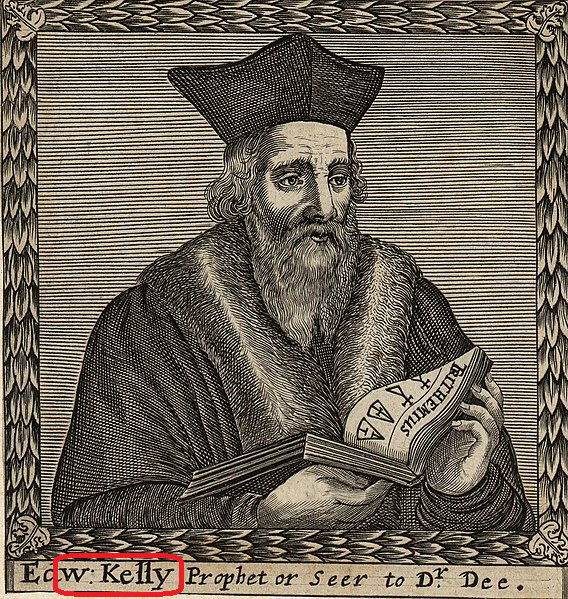
There's also the fact that the Pogo cartoonist's name is Walt Kelly.
In my recent post "April 27 and the whale," I mentioned encountering that date -- the date of Dee and Kelley's whale vision and my post about my own whale dream -- as the date of a Dutch holiday on which people wear orange to honor their king. As detailed in that post, this was a synchronicity because I had twice recently encountered the book title The King in Orange. The King in Yellow is of course a much better known title, and at first I thought the "orange" version was simply a mistake, but then I happened to hear an interview with the author of a book actually called The King in Orange -- and he spent much of the interview talking about Pepe the Frog!
I mention this because of the Pogo reference to "the prettiest frog I ever heard" and because "The Bee of the Bird of the Moth" includes a similar reference to something orange-not-yellow.
Got a brand new shipment of electrical equipment
It's addressed to the bottom of the sea
Send a tangerine-colored nuclear submarine
With a sticker that says STP
Windshield wiper washer fluid spraying in the air
Head lice under hats lie in the headlights everywhere
Subatomic waves to the underwater caves
Of the bee of the bird of the moth
The Beatles made a yellow submarine famous, but here we have an orange one.
"The underwater caves of the bee" is also significant, because just last November I was writing about underwater bees: "What a weird and evocative image -- swarms of honeybees crossing the ocean as if in 'a whale in the midst of the sea'! (Bees in the belly of the beast is also a link to Samson.)" Note that I linked the Book of Mormon image of bees in a "whale" (actually a submarine) to Samson's finding bees in the carcass of a lion. "The Bee of the Bird of the Moth" associates a submarine with a bee in an underwater cave. Dee's whale roared "like a cave of lions." Whales, bees, caves, lions. I have even associated John Dee with the bee via "Sloop John B," making Dee and Bee interchangeable.
One final note: I first became aware of The King in Yellow back in 2000, because someone had used a Markov chain program to created a computer-generated mashup of The King in Yellow and the Egyptian Book of the Dead, as well as similar hybrid works like Alice in Elsinore. Such chimerical texts are very much in the spirit of "The Bee of the Bird of the Moth."
Back in 2014, I dreamed of seeing a whale with many eyes on TV, and the dream "came true" the next day when I saw a very similar image in a Keanu Reeves movie on TV. It seemed like such a pointless thing to be made precognitively aware of, and I commented at the time, "None of my precognitions so far have been of anything that could even remotely be considered important or meaningful."
That was eight years ago. The arc of the synchronistic universe is long, but it does sometimes bend toward meaning.
⁂
In a comment yesterday, Carol has alerted me to the possible relevance of "The Beast Below," an episode of Doctor Who which was first broadcast on April 10, 2010. I've never seen it, or any other Doctor Who episode, but judging from Carol's summary and others found online, I think she's right.
"The Beast Below" is set in the distant future (29th century), when Earth has become uninhabitable due to solar flares. The British population, led by Queen Elizabeth X, survives aboard the gigantic Starship UK. They are all unaware of the fact that their starship has been built around the body of a "star whale" which serves as its means of propulsion, and the whale is controlled by sending painful electrical impulses into its brain. It is believed that if they stop torturing the whale, it will break free and the people of Starship UK will be doomed. This unpleasant fact is revealed to each citizen from time to time, at which point they must choose either to accept it and have their memory of the revelation erased or else register protest and -- well . . .
Amy is taken . . . to one of many voting booths set up on the ship . . . . She is shown a video about the truth of Starship UK, and then asked if she wants to protest the truth or forget it, the latter causing her short-term memory to be wiped. Amy chooses to forget, and creates a video to herself to prevent the Doctor from learning the truth, before the mind wipe. The Doctor is curious as what "protest" will cause and activates it, sending him and Amy into the maw of a giant creature below the ship. The Doctor induces the creature to vomit, allowing them to escape back to the ship. The Doctor and Amy meet Queen Elizabeth X, known as Liz 10, the ruler of the ship.
The Doctor's meeting a Queen Elizabeth parallels Dr. Dee's relationship with Elizabeth I -- and just like Dee, the Doctor enters the maw of a otherworldly whale and survives. As you can see in the illustration at the top of this post, the "star whale" shares an unwhalelike feature with the many-eyed whale (also called a "beast") I saw in my 2014 dream: "feelers on the sides of its mouth like a catfish."
In "The Beast Below," it is eventually discovered that the star whale came to Earth willingly, moved by compassion, to help the people of the UK escape, and that none of the torture had ever been necessary in the first place. The people had thought they had captured this beast and forced it to serve them, but in fact the whale was motivated by selfless love and willingly endured the unnecessary tortures inflicted on it by the ignorant humans. In the end, the torture is stopped and the starship continues on its way. It is decided that the people should no longer be kept in ignorance of the whale. Amy recites this rhyme:
In bed above, we're deep asleep
While greater love lies further deep.
This dream must end, this world must know:
We all depend on the beast below.
I don't know if the allusion is intentional, but to me this calls to mind Zarathustra's roundelay (Nietzsche), which I translated in 2019.
O man, give ear! Deep midnight speaketh; canst thou hear? "From sleep, from sleep, From dreaming deep I woke and rose; The world is deep, More deep than day would e’er suppose. How deep her woe! Joy—deeper still than heartache, she. Though woe cry, 'Go!' All joys long for eternity— For deep on deep eternity!"
"In bed above, we're deep asleep" also calls to mind the chorus of the Barenaked Ladies song "Brian Wilson," which recently came up in connection with Dee's whale.
Because I'm lying in bed
Just like Brian Wilson did
Well I am lying in bed
Just like Brian Wilson did, yeah
Carol ended her comment with this:
Final point: John Dee's whale was God - Doctor Who's star whale was a savior, responding to the cries of frightened children.
Carol is not the only one to have made this connection. When I was searching for an image of the star whale with which to illustrate this post, one of the first hits that came up was an old post by Carmen Andres called "The great love of star whales and God." Andres writes:
I’m thinking more of the idea of a being enduring suffering of great proportions and yet responding not by withdrawing life giving and sustaining power and salvation but increasing it. I see that a profound echo of Jesus, who came to earth in love and compassion to save us from destruction and darkness. Yet none of us understood; even the best of us who did not abandon him did not comprehend who he really was and what he could do, and the worst of us tortured and executed him. And after voluntarily enduring unimaginable pain and suffering, he could have justly and understandably abandoned us, even destroyed us. But instead he explodes with abundance—with a profusion of unimaginable love, life and salvation.
I also think of a passage in Joseph Smiths's writings, about -- who else? -- Enoch, in which the Earth itself is the longsuffering "beast below":
And it came to pass that Enoch looked upon the earth; and he heard a voice from the bowels thereof, saying: Wo, wo is me, the mother of men; I am pained, I am weary, because of the wickedness of my children. When shall I rest, and be cleansed from the filthiness which is gone forth out of me? When will my Creator sanctify me, that I may rest, and righteousness for a season abide upon my face?
And when Enoch heard the earth mourn, he wept, and cried unto the Lord, saying: O Lord, wilt thou not have compassion upon the earth? Wilt thou not bless the children of Noah? (Moses 7:48-49)
I come back again to Dee's vision of a whale on a hill, "roaring like a cave of lions." In the angels' interpretation, the hill is the world, the waters are the bosom of God, and the whale is the Spirit of God. Why is the Holy Spirit -- more often characterized as a gentle dove or a still, small voice -- roaring like a cave of lions? Is it not a cry of pain? A beached whale is in agony. The Spirit of God leaves its natural home in the bosom of God and enters this corrupt and broken world, the devil's domain, suffering whatever is necessary to save God's children. "Knowest thou the condescension of God?" (1 Ne. 11:16). "Grieve not the Holy Spirit of God" (Eph. 4:30).
⁂
In "The Beast Below," the people are "deep asleep," wilfully deluded, having chosen to make themselves forget the uncomfortable fact of their dependence on the suffering whale. Despite their status as "sleeper," they are not passive and surrendered but precisely the opposite: They have seized the whale by force and tortured it into doing what they want -- not realizing that none of that was ever necessary, that it had come to them of its own free will and wanted to help them all along. This ties into the LSD theme of the current sync-stream and William Wildblood's 2017 post "Drugs and Spirituality." Taking psychedelics is of course an attempt to lose oneself, to abdicate will and enter an egoless state in which things just happen -- but Wildblood points out that it is at the same time an attempt to force a transcendent state.
The point is that it is an artificial means to try to take the kingdom of heaven by storm and therefore a fundamentally irreligious thing to do. It is putting your will above God’s. If he wants you to experience transcendent states he is perfectly capable of giving them to you. However he knows the strong likelihood that a person gets attached to these states and loses the reason for being on the spiritual path in the first place which is to get closer to God through the heart not by means of drugs. The latter will make the former more difficult not less so.
I have never used drugs, but many years ago when I was tempted to try to force things through roughly analogous "magical" means, I used to chide myself with a line from the Book of Job: "Canst thou draw out Leviathan with a hook? or his tongue with a cord which thou lettest down?" -- the point being that what is forced is not real, that if you can draw it out with a hook it's not the genuine Leviathan. I haven't thought about that for years, but now how strange it seems that I should have chosen landing a whale, of all things, as my metaphor!
To the Doctor Who line "In bed above, we're deep asleep" the synchronicity fairies have added "just like Brian Wilson." The name Brian is thought to derive from the Old Celtic element bre, meaning "hill"; and Wilson is of course from Will (the first element of William), meaning "will, desire." There is a clear connection here to idea of forcefully drawing a whale out of the water and up onto a hill -- which is what Brian Wilson was symbolically attempting with his drug use. In Dee's vision, though, the whale comes to the hill of its own accord.
And suddenly The Firmament and the waters were joyned together, and the Whale CAME, like unto a legion of stormes: or as the bottomless Cave of the North when it is opened: and she was full of eyes of every side.
The Prophet said, Stand still, but they trembled. The waters sank, and fell suddenly away, so that the Whale lay upon the Hill, roaring like a Cave of Lions
In "Whale Music," I noted Brian Wilson's (and Dee's) characterization as a naked man. This connects with another part of William Wildblood's drug post.
You see, drugs operate in the world of experience but spirituality, true spirituality, the spirituality of the saints, is a matter of innocence meaning precisely that it is a natural not artificial expression of what you are inside.
Nakedness is innocence -- in animals, babies, and prelapsarian man -- but for a grown man to go naked is an artificial attempt to force or simulate innocence (a self-contradictory pursuit), to crawl back into the womb or return to Eden. Drugs, seen as an artificial way of simulating the spontaneous mystical consciousness of primitive man, are the same sort of thing.
On April 6, I left this comment on my own post:
I could swear that when I checked the THC website last night, the latest episode was called “The Book of Enoch,” but I just checked it again now to get the link, and it’s not there. I must have dreamed it.
This drove me crazy for a week. I knew I hadn't dreamed it. I could even remember the background illustration -- what looked at first like three dark, hunched figures, until two of them resolved themselves into the wings of the other. I thought the episode must have been posted and then removed for some reason, maybe because Carlwood had accidentally posted it too soon. I kept checking THC every day to see if it would reappear, but it never did. Last night the mystery was finally resolved, when I happened to click the wrong thing on YouTube and found that the April 6 "Book of Enoch" show wasn't on THC but on Jonathan Pageau's channel: "The Book of Enoch: Fallen Angels and the Modern Crisis." I haven't watched the whole thing yet, but he begins by talking about the fall of Adam and Eve.
There's a sense in which the fruit of the knowledge of good and evil was going to be given to Adam and Eve ultimately, but the reason why it made them fall was because they took it too fast. They took it through an act of desire. It says that, you know, the woman saw that the fruit was good to eat, and so she reached up and grabbed it for herself, and because of that gesture of taking it for yourself and taking it in desire, that is what will ultimately lead to a fall.
In other words, they tried to draw out Leviathan with a hook -- or, as William Wildblood puts it, to "take the kingdom of heaven by storm." They took by force what God was actually willing to give them, just like the people of Starship UK torturing the star whale.
The ideal is to be the opposite of our metaphorical "Brian Wilson," or of the citizens of Starship UK; to do the opposite of lying in bed naked doing drugs, the opposite of torturing a star whale into submission an then lying to yourself about it. ("For every one that doeth evil hateth the light, neither cometh to the light, lest his deeds should be reproved.") This dream must end, this world must know. The ideal is to be fully awake and conscious, knowing what we do and why, and at the same time to be fully surrendered to God.
What's it about? Here's how Margot Mifflin's 1990 review in The New York Times, titled "Bad Vibrations," begins.
The story of the Beach Boy Brian Wilson is a tangled yarn of excess, knotted with the kind of pathetic drama only actors and rock stars seem capable of living. Brian Wilson has been riddled with mental problems, is 96 percent deaf in one ear, has snorted an entire gram of cocaine in one breath, used to keep his piano in a sandbox and, in the early 1970's, stayed in bed for the better part of four years. His Beach Boy brother Dennis kidnapped his own child and then killed himself by diving - drunk - off a yacht. His father was a jealous opportunist who, in 1969, for easy money, sold the rights to every song Brian Wilson had ever written. Add wealth, fame and a steady diet of drugs to his biography and you get a story that would strain credulity even if it were printed as fiction.
Paul Quarrington's ''Whale Music'' is, redundantly enough, a fictionalization of Brian Wilson's life.
This nimble portrait of a rock 'n' roll legend turned Beverly Hills eccentric will amuse anyone who's followed the misfortunes of real-life ex-superstars.
So there are Hills as well as whales.
The cover of the first edition shows a naked man at a piano, and nakedness is mentioned in the Penguin blurb, too.
Des Howell is a former rock 'n' roll star who never leaves his secluded oceanfront mansion. Naked, rich and fabulously deranged, he subsists on a steady diet of whiskey, pharmaceuticals and jelly doughnuts and occasionally works on his masterpiece, "Whale Music."
In the account of Dee and Kelley's whale vision, the angels say that "the naked man is Dee."
So, despite one commenter's misgivings, I don't think "We come on the sloop John Dee" was noise. There seems to be a real connection there.
⁂
Note added: Apparently Brian Wilson is really big in Toronto -- hometown not only of Paul Quarrington, author of Whale Music, but also of Steven Page of the Barenaked Ladies, who wrote a song called "Brian Wilson." Here's the cover art:
Here we find Brian Wilson juxtaposed with the word naked and with, if not exactly a whale, at least a large air-breathing fish (since smoking implies lungs).
Craig Davis commented that when I talk about John Dee, it always makes him think of the Jimmy Buffett song "Ellis Dee (He Ain't Free)." For me, the song it always puts in my head is "Sloop John B" as sung by the Beach Boys on Pet Sounds.
See how the mainsail sets
Thinking about this led me to the Wikipedia article for "Pet Sounds" because I had a hunch that it might have been released on April 27. It wasn't, but I did find this:
"Run, James, Run" was the working title for the instrumental "Pet Sounds", the suggestion being that it would be offered for use in a James Bond movie.
The reader will recall that the current sync-storm began when I heard someone compare James Bond to John Dee (supposedly "the original 007").
I also found this:
In April, after consuming a full dose of LSD, Wilson had what he considered to be "a very religious experience" and claimed to have seen God.
This caught my attention because the first time I heard about Dee's whale experience, it was presented as a vision of God: "And at one point they even meet God, and God is not an old man with a white beard up in the clouds. God is a whale covered with eyes." And Dee's experience was also in April -- specifically, on April 27, 1584.
Trying to find more details about the precise date and content of Wilson's experience, I searched for brian wilson lsd vision of god and found this carefully constructed timeline. Lo and behold:
April 26 or 27, 1966
This webpage contends that Brian Wilson drops acid for the third time on the beach located in Lake Arrowhead, California. Brian contemplates the riddle and finds the answer to the riddle he was presented with in December. It is the ultimate religious experience ("...this trip was the ultimate in LSD joyrides--everything it was supposed to be, four hours of enlightenment and spirituality") from which a new "reborn" Brian Wilson emerges. Part of the enlightening spiritual experience is the conceiving of the Beach Boys' next album and single.
April 26 is the date of my own dream about a many-eyed whale, which I posted about the next day, April 27, which is also the date of Dee and Kelley's similar vision.
Wilson's April 26 or 27 acid vision was experienced as "the answer to the riddle he was presented with in December." Here, according to the same website, is the riddle.
Several days before Christmas 1965
Brian suffers what he considers an acid flashback in the Pickwick Bookstore. It is a totally unexpected experience.
"I couldn't even remember why I'd gone to the store. It was spooky. I walked into the store anyway. The clerk, who knew me, said hello and mentioned that he was crazy about "Barbara Ann," which was all over the radio. Moving slowly into the aisles, I concentrated on reading the book titles and their authors....I paged through books... I stared at the pages, tried to read, but the letters all vibrated on the pages and I couldn't make sense of anything. Then I saw the books melting down the shelves, dripping like wax down the side of a candle. The room began to spin. I was in the center of a giant spinning top. Turning, turning, turning. The moment was completely surreal.
"As the buzz subsided into a manageable burned-out sensation, I remembered Loren [Schwartz] once explaining that hallucinations were comparable to Zen riddles, mysteries full of meaning. What had mine meant? I had driven to the bookstore, looking for what? Inspiration? Instead, I'd seen books melting, unable to grasp the knowledge contained in them. If that was a riddle, I wanted to know the solution."
"Hallucinations were comparable to Zen riddles, mysteries full of meaning." That's how I feel about the whale vision. It seems like it ought to mean something, but I have not yet found the solution.