Showing posts with label Herman Melville. Show all posts

Sunday, October 9, 2022

Blasphemy against Zeus, F. Scott Fitzgerald, and whale vision

I was at a bookstore yesterday to place an order for some textbooks, and I happened to see these two books displayed together.


In the context of the Greek name Zeus, the phrase a dick suggests ádikos, “unjust.” Since Zeus was proverbially just, this would be a blasphemous inversion of a common piety, analogous to Christopher Hitchens’s God Is Not Great.

In my recent post "A forgotten literary movement," I recounted a dream in which I asked one person after another to help me remember the name of an early 20th-century literary movement. The only name I could remember associated with the movement was Francis Scott Key, which I knew wasn't right. No one was able to help me with the name of the movement, except one person who suggested, "Wasn't there a group of writers around that time called the Schmucks?" Upon waking, I guessed that the "Francis Scott Key" I had been thinking of must have been the early 20th-century novelist Francis Scott Key ("F. Scott") Fitzgerald.

In the above display, Fitzgerald is juxtaposed with the word dick. In my dream, it had been suggested that "Francis Scott Key" might have been part of a group called the Schmucks -- and schmuck is the Yiddish counterpart to dick, meaning both "penis" and "contemptible person."

I have never read anything by Fitzgerald, but I do own one of his novels: the Penguin Popular Classics edition of Tender Is the Night. On the back cover, between the title and the summary, is the boldface quote, "Help me, help me, Dick!" -- Dick Diver being the main character, based on Fitzgerald himself.

On the Fitzgerald book in the photo above, a white coffee cup is placed so as to appear that it is on Fitzgerald's head. In a few recent posts, including "Dreams, shifty-eyed owls, and the white Starbucks cup," I have discussed a Time magazine cover in which a white coffee cup is placed so as to appear that it is on the head of Kamala Harris. I commented that the cup on her head made me think of the Graeco-Egyptian god Serapis, who wore a cup-shaped headdress. Originally a combination of Osiris and the bull-god Apis, this god was later combined with Zeus and worshipped as "Zeus-Serapis."

(My earlier posts have associated the white cup both with the owl and with Serapis. Last night, I happened to see a random shitpost on /x/ which had a picture of a German woodcut of a bull-headed Moloch idol and said, “This is Moloch. His name is pronounced MOE-lock. He is an owl. That is all.” Yesterday, someone emailed me some of Royal Skousen’s textual research on the Book of Mormon. Among its new-to-me conclusions was that the name printed as Mulek in the BoM as we have it is a scribal error, and that this character’s correct name is Muloch, interpreted by Skousen as a variant of Moloch. In the /x/ thread, an anon argued that Moloch was itself an error for the common noun melek, “king.”)

"Zeus is a dick." Dick is Fitzgerald's fictional alter-ego. Zeus is Serapis. Fitzgerald is portrayed as Serapis.

In the posts about the white Starbucks cup, one of the commenters mentioned that the name Starbuck comes from Moby-Dick., which brings us to the next thing that caught my eye yesterday.


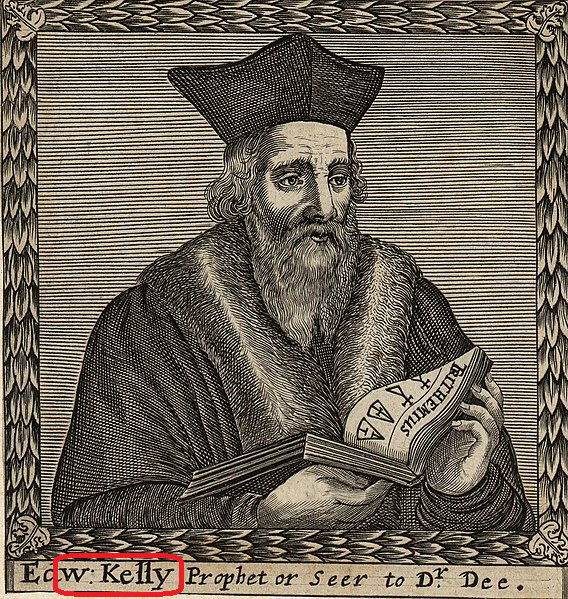
A whale juxtaposed with the word vision. This made me think of the synchronistic saga of the whale with many eyes. Eyes are organs of vision, and I had also used that word repeatedly with reference to Dee and Kelley’s whale experience. See for example “I posted my many-eyed whale dream on the 430th anniversary of Dee and Kelley’s many-eyed whale vision.”

Then I noticed that the word could also be read as VI Sion. I had recently read the seven Penitential Psalms aloud in Latin, and they include a few references to Sion (the Latin spelling of Zion). The first Penitential Psalm is Psalm VI, and the sixth is De Profundis, which alludes to Jonah’s prayer from within the belly of the whale.

Then I thought that V. I. Sion could stand for Veni in Sion, “come to Zion.” At the same time, V. I. is 5 followed by 1. In Isaiah 51, we read “Et nunc qui redempti sunt a Domino revertentur, et venient in Sion laudantes,” “Therefore the redeemed of the Lord shall return, and come with singing unto Zion” (v. 11). Just two verses previous, the Lord is addressed as the one “that hath cut Rahab, and wounded the dragon” — Rahab being a sea monster similar or identical to Leviathan, and thus a link to the whale.

Later that day, we visited some of my wife’s relatives. Our young nephew showed me a children’s book about sea creatures, opening up to a page that had a picture of a whale shark mislabeled (in both Chinese and English) as a “great white shark.” When a whale is called a great white, that’s obviously another link to Moby-Dick.

The TV was on, and there was a trailer for some sort of romcom starring George Clooney and Julia Roberts. In one scene, the Clooney character is reluctant to swim with dolphins, saying, “Are you sure they’re not sharks?” but is persuaded to jump into the water. The scene then cuts to him saying, “I can’t believe I got bit by a dolphin!”

Sunday, July 31, 2022

NPH 421 and spontaneous human combustion

On July 28, 2022, I was stopped at a red light when I noticed the text on the back of the T-shirt of the motorcyclist in front of me. It was written in the style of an eye chart, and it said: "Stay with me boy. See the world through the eyes of Mickey. Don't stop looking." I assume this was some sort of mutant Disney knockoff, but in the current synchronistic context I figured "Mickey" (a nickname for Michael) was more likely to be a hawk-eyed archangel than a mouse. Anyway, I took it as an injunction to keep my eyes and mind open.

At the next light, my eyes were drawn as if by magnetism to a license plate that read NPH 421. That means Nephi, of course, an important name in the Book of Mormon, so my first thought was that the numbers were giving chapter and verse. There are four books of Nephi, and none of them has 42 chapters, so I looked up 4:21 in each of the first three books of Nephi. Fourth Nephi is very short and isn't divided into chapters, so I checked 4 Ne. 21. Of the four verses I checked, only one of them struck me as in any way noteworthy:

He hath filled me with his love, even unto the consuming of my flesh (2 Ne. 4:21).

I thought that was an odd turn of phrase. In the Bible, the "consuming of flesh" is always associated with burnt offerings, destruction by fire, and horrible plagues. The verse from Nephi made me think of Paul's equally strange statement that "though I give my body to be burned, and have not charity, it profiteth me nothing" (1 Cor. 13:3). Paul's other examples of things that are worthless without charity include prophesying, having great faith, feeding the poor, and the like; how did "giving my body to be burned" make it onto that list of good works? How is that even a good work at all? I thought it might be a reference to submitting to fiery martyrdom of the type pioneered by Nero and taken up centuries later by the Inquisition, but 1 Corinthians was written before Nero's accession to the throne, and I don't think "being burned" would have been an understandable reference to martyrdom at that time.

Then I had the thought that 421 was a year, not a scripture reference. AD 421 is, after all, the very last date in the Book of Mormon chronology, the year in which Moroni, the last surviving Nephite (NPH), finished the book -- an abridgment of the Plates of Nephi, with additions by Mormon and Moroni -- and buried it in the earth.

Then I remembered that in my July 2021 post "In the sync stream" had prominently featured Moroni (both the Nephite and the city in the Comoros) and even mentioned that the "golden plates are supposed to have been buried by Moroni in the Hill Cumorah." 

In the opening paragraph of that post, I had written that "when I think Moby-Dick, I think 'The Whiteness of the Whale' and I think 'Loomings.'" Then at the end of the post, I noted seeing the number 142 and feeling it was significant, not knowing why until eventually I "realized that 1 and 42 are the numbers of the two Moby-Dick chapters I mention in the first paragraph."

But I had actually begun the post by mentioning first "The Whiteness of the Whale" (Chapter 42) and then "Loomings" (Chapter 1) -- not 142, but 421. Then in the same post I had gone on to mention, for reasons entirely unrelated to Moby-Dick, Moroni's burying the golden plates -- which is supposed to have occurred in AD 421. Not until now, a year later, did I make the connection.

Moroni, the last survivor of his people, passed on their history to future generations. This is precisely the role played in Moby-Dick by Ishmael, the sole survivor of the wreck of the Pequod. The epilogue begins with an epigram from the Book of Job: "And I only am escaped alone to tell thee."

One of the comments on my "In the sync stream" post began: "Interesting. The license plate post was also good."

So satisfying was that interpretation of NPH 421 -- the last Nephite in the year 421 -- that I dismissed my earlier attempts at chapter-and-verse interpretations as barking up the wrong tree. Then I noticed my July 30 post "And then the message said, 'End of message," which ends with what I admit is a completely unrelated reference to spontaneous human combustion.

Spontaneous human combustion -- doesn't that very obviously sync with "He hath filled me with his love, even unto the consuming of my flesh" (2 Ne. 4:21)? Also it's a little known fact that the name Nephi is not original to the Book of Mormon but appears in one of the apocryphal books of the Bible -- as the name not of a person but of a flammable liquid (2 Macc. 1:36). Nephi is the King James rendering; most modern translations have naphtha.

Why does my July 30 post have the title it has? I was posting about how I had just finished reading a book called The Messengers, so "end of message" seemed appropriate. The precise wording, though, is from one of Joe Biden's teleprompter gaffes.

In my December 2020 post "American politician spontaneously combusts!" I describe my absurd but persistent premonition about the spontaneous combustion of Joe Biden (without mentioning Biden by name). Later, in September 2021, I had a dream in which reference was repeatedly made to "Joe Biden, the Human Torch"; days later, Biden suddenly acquired the nickname Brandon, which is French for "firebrand."

My 2020 post quoted an excerpt from Unsong in which George W. Bush bursts into flames after someone hacks his teleprompter and makes him utter a magic word that has that effect. One of the comments to that post said:

After reading the George Bush excerpt, I think 'spontaneous human combustion' might be a metaphor for a politician 'melting down' during a public appearance. Justly or unjustly, Biden is particularly singled out among politicians as someone who relies on a teleprompter to keep on track.

Then, yesterday, without consciously making the connection at all, I published a post with a Biden teleprompter gaffe as a title, and although it is primarily a post about Mike Clelland's book on owls, I included a reference to Unsong and then one to spontaneous human combustion.

Wednesday, July 20, 2022

Two hundred and fifty-nine

Last night I stopped at a coffee shop on my way home to buy something for my wife. The cashier gave me a receipt saying that my order number was 259, circling that number with a sharpie.


This is a significant number to me.

Simple English Gematria (S:E:G:) assigns numerical values to words and phrases by adding up the ordinal values of their constituent letters (A = 1, B = 2, . . . Z = 26). In this system, the value of the string "two hundred and fifty-nine" is 259. I am only aware of two numbers that have this property, the other being 251.

Furthermore, 259 is seven times 37, and 37 is a highly significant number. Twice 37 is 74, the S:E:G: value of the words simple, English, and gematria, as well as that of Jesus, cross, gospel, and Messiah. Twenty-four times 37 is 888, the value of the name Jesus in Greek gematria. Eighteen times 37 is 666. Seventy-three times 37 is 2701, the Hebrew gematria value of the first verse of the Bible.


This morning, I prayed the Rosary in my chapel, as is my habit these days. At the end of my prayers, a phrase popped into my mind unbidden: "to evade this world's snares and penetrate its mysteries." My eyes then fell on two books that I had left on a shelf in the chapel, having forgotten to take them out when I converted the room to its present purpose: Moby-Dick and Strieber's The Secret School. About an hour before my prayers, I had read a few pages of Mike Clelland's The Messengers -- a passage that mentioned whales, and another that said, "An example: a hologram of an owl would appear. When I would see something like that, that would tell me it's time for school."

The number 259 came back into my mind, and I had the distinct impression that I should check the 259th page of each of those books.

In my copy of Moby-Dick, page 259 is the last page of a chapter and only has a few lines of text on it:


This seemed highly relevant to "to evade this world's snares and penetrate its mysteries."

Page 259 of The Secret School is part of the afterword by journalist Ed Conroy. Here is the first paragraph on the page:


The juxtaposition of this with the Moby-Dick page, with its heading "The Albatross," struck me because in my July 2021 post "In the sync stream," I had connected an angel on a temple spire with the albatross and Moby-Dick.

I thought of how the angel Moroni [on the spire of the Nauvoo temple] was occupying the place that would traditionally be given to the cross, which made me think of the Coleridge line “instead of the cross, the albatross.” And this brought me back to Melville: Ishmael’s recollection of the first albatross he ever saw, which he repeatedly likens to an angelic being. “Its vast archangel wings, as if to embrace some holy ark” — “flew to join the wing-folding, the evoking, the adoring cherubim” — “as Abraham before the angels, I bowed myself.”

Conroy mentions "four-winged angels" -- i.e., cherubim as described by Ezekiel (in contrast to the six-winged seraphim of Isaiah) -- and cherubim is the precise word used by Melville with reference to the albatross.

Saturday, April 16, 2022

Be he moth or be he bird

Last November, I thought of some lines from Walt Kelly's old malapropism-driven comic strip Pogo and tried to track them down online. In the strip I was thinking of, one of the characters says, "A frog's not a bird. It's a behemoth!" and another character responds with,

Oh, be he moth or be he bird,
He's the prettiest frog I've ever heard.

I couldn't remember anything about the context, not even which two characters had this little exchange (Churchy and Howland maybe?), so I thought I'd try to find the strip.

Unfortunately, Calvin and Hobbes is the only comic cool enough to get its own search engine, so I had to use regular Google. When I put be he moth or be he bird into the search box, all that came up was the They Might Be Giants Song "Bee of the Bird of the Moth." As a long-time TMBG listener, I knew that song well, but I had never made the connection to the Pogo line. It's quite a striking one, though; how often do you find be(e), moth, and bird juxtaposed like that?

The TMBG song was almost certainly not inspired by some obscure Pogo strip from who knows how long ago. (My mother has scads of old Pogo books from the forties and fifties, and I read them all many times as a child.) They credit Jonathan Lethem as their source, one of his "promiscuous songs" (free lyrics for bands to use or adapt) called "The Moth of the Bee of the Birds," which is about a sort of sexual Bartleby who "would prefer not to" have anything to do with the birds and the bees.

Pollinate? I’d prefer not to
I’d prefer anything
to being
the moth of the bee of the birds

Find a mate? I’d prefer not to
I’d prefer anything
to bee-ing, to bird-ing
the moth of the bee of the birds . . .

They Might Be Giants pinch the bee/bird/moth combo but otherwise completely rewrite the song. "The Bee of the Bird of the Moth" is about the hummingbird moth -- a sort of moth which resembles a sort of bird which resembles a bee. This chimerical creature becomes a symbol of the breaking down of boundaries, of things that should be utterly distinct blurring together, and of Goya's "sleep of reason" that produces monsters.

I made a note of this Pogo/TMBG connection back in November but didn't post about it because it didn't seem connected to anything else. Now, though, the word behemoth has appeared in the sync-stream, and things are different. I posted about behemoth, and its connections to Enoch and to killer whales, in a post titled "Call me Ishmael" -- the famous opening sentence of Herman Melville's greatest novel, Moby-Dick. Melville's greatest short story is without question Bartleby, The Scrivener, and its defining line is, "I would prefer not to."

There's also the fact that the Pogo cartoonist's name is Walt Kelly.


In my recent post "April 27 and the whale," I mentioned encountering that date -- the date of Dee and Kelley's whale vision and my post about my own whale dream -- as the date of a Dutch holiday on which people wear orange to honor their king. As detailed in that post, this was a synchronicity because I had twice recently encountered the book title The King in Orange. The King in Yellow is of course a much better known title, and at first I thought the "orange" version was simply a mistake, but then I happened to hear an interview with the author of a book actually called The King in Orange -- and he spent much of the interview talking about Pepe the Frog!

I mention this because of the Pogo reference to "the prettiest frog I ever heard" and because "The Bee of the Bird of the Moth" includes a similar reference to something orange-not-yellow.

Got a brand new shipment of electrical equipment
It's addressed to the bottom of the sea
Send a tangerine-colored nuclear submarine
With a sticker that says STP

Windshield wiper washer fluid spraying in the air
Head lice under hats lie in the headlights everywhere
Subatomic waves to the underwater caves
Of the bee of the bird of the moth

The Beatles made a yellow submarine famous, but here we have an orange one.

"The underwater caves of the bee" is also significant, because just last November I was writing about underwater bees: "What a weird and evocative image -- swarms of honeybees crossing the ocean as if in 'a whale in the midst of the sea'! (Bees in the belly of the beast is also a link to Samson.)" Note that I linked the Book of Mormon image of bees in a "whale" (actually a submarine) to Samson's finding bees in the carcass of a lion. "The Bee of the Bird of the Moth" associates a submarine with a bee in an underwater cave. Dee's whale roared "like a cave of lions." Whales, bees, caves, lions. I have even associated John Dee with the bee via "Sloop John B," making Dee and Bee interchangeable.

One final note: I first became aware of The King in Yellow back in 2000, because someone had used a Markov chain program to created a computer-generated mashup of The King in Yellow and the Egyptian Book of the Dead, as well as similar hybrid works like Alice in Elsinore. Such chimerical texts are very much in the spirit of "The Bee of the Bird of the Moth."

Friday, April 1, 2022

Call me Ishmael.

After a few days of the synchronicity fairies harping on the the idea of the whale as a metaphysical symbol, it is inevitable that one's thoughts should turn to Moby-Dick. I read Moby-Dick back in 2006, and it blew me away. I thought I was probably going to keep reading and rereading it for the rest of my life. As things have played out, though, I never did read it again. The same goes for Paradise Lost, which I read at about the same time.

(Why did I pick up Moby-Dick in the first place? Because someone had told me, without elaborating, that he thought I might be Herman Melville reincarnated. That never really panned out, either.)

Anyway, about the name Ishmael.

When I left the Mormon Church, which was four years before I had read any Melville, my newfound atheism coexisted uneasily with an absurd but unshakable feeling that I was doing what God wanted me to do. (Nowadays, I think that may have been true. God  needed to get me out of the institutional church to which I was so tightly bound, and only a total loss of faith would do the trick.) At that time, a passage from the Book of Mormon came to mind, ripped from its context, and I applied it to myself (which is what Nephi said we should be doing with scripture anyway!).

And Aaron said unto the king: Behold, the Spirit of the Lord has called him another way; he has gone to the land of Ishmael, to teach the people of Lamoni.

Now the king said unto them: What is this that ye have said concerning the Spirit of the Lord? Behold, this is the thing which doth trouble me (Alma 22:4-5).

"The Spirit of the Lord has called him another way" -- that was the exact feeling. But what was "the Spirit of the Lord"? What could any of that possibly mean to an atheist. Behold, this is the thing which did trouble me.

The Aaron and Ishmael mentioned in the passage I have quoted are not the familiar biblical figures, but the occurrence of the name Ishmael nevertheless made me think of Genesis.

And the angel of the Lord said unto her, Behold, thou art with child and shalt bear a son, and shalt call his name Ishmael; because the Lord hath heard thy affliction.

And he will be a wild man; his hand will be against every man, and every man's hand against him; and he shall dwell in the presence of all his brethren (Gen. 16:11-12).

As a firstborn son who had just officially made himself the black sheep of the family, to live as "a wild man" unmoored from institutions, I identified with this Ishmael, too, and I read all the biblical connotations of Ishmael into the Book of Mormon line about being "called . . . another way . . . to the land of Ishmael."


Remembering all these things today, I realized that there is another figure who is called a "wild man" in Mormon scripture: the biblical prophet Enoch.

And it came to pass that Enoch went forth in the land, among the people, standing upon the hills and the high places, and cried with a loud voice, testifying against their works; and all men were offended because of him.

And they came forth to hear him, upon the high places, saying unto the tent-keepers: Tarry ye here and keep the tents, while we go yonder to behold the seer, for he prophesieth, and there is a strange thing in the land; a wild man hath come among us (Moses 6:37-38).

The name Enoch is of course a link, in very general terms, to John Dee and his "Enochian" system -- but what I saw when I read this was the mention of Enoch "standing upon the hills." Later, at the end of Joseph Smith's Enoch narrative, God receives Enoch "up into his own bosom" (Moses 7:69). The language reminded me of what the angels said to Dee: "The Hill is the World, The waters are the bosome of God, . . . The Whale is the spirit of God." This links Enoch not only to Dee, but specifically to the center of the current sync-storm: Dee's whale on a hill.

Dee did not specify what kind of whale it was, but the sync fairies have associated it specifically with the orca, or killer whale -- and, as I shall explain presently, Enoch = Behemoth = killer whale on a hill.

The Enoch-Behemoth connection comes from the apocryphal book of 2 Esdras.

Then didst thou ordain two living creatures, the one thou calledst Enoch, and the other Leviathan;

And didst separate the one from the other: for the seventh part, namely, where the water was gathered together, might not hold them both.

Unto Enoch thou gavest one part, which was dried up the third day, that he should dwell in the same part, wherein are a thousand hills:

But unto Leviathan thou gavest the seventh part, namely, the moist; and hast kept him to be devoured of whom thou wilt, and when (2 Esdras 6:49-52).

Leviathan, the great sea monster, is always paired with Behemoth, the great monster of the land. Here, for some reason, the name Enoch is used instead, but the context makes it obvious that it means Behemoth, not the prophet. And note that hills are mentioned again -- Enoch's domain is "wherein are a thousand hills."

But surely it is Leviathan that is to be identified with the whale, not Behemoth! Melville continually refers to whales as Leviathans, and it is even the word for "whale" in modern Hebrew. Whatever Behemoth might have been, it obviously wasn't a whale, right?

Well, I grew up reading not only the Apocrypha but also old D&D manuals, so I can tell you that Behemoth is a whale -- and not just any whale, but specifically a killer whale on a hill. This is a scan from the 1980 edition of Deities and Demigods. (Fortunately, you can find anything on the Internet!)


How perfect a match is that? Behemoth -- alias Enoch -- is portrayed as "a killer whale . . . that inhabits the plains and hills," and its inclusion in a book called Deities and Demigods also implies that it is in some sense -- like Dee's whale on a hill and Miller's orca -- a god.

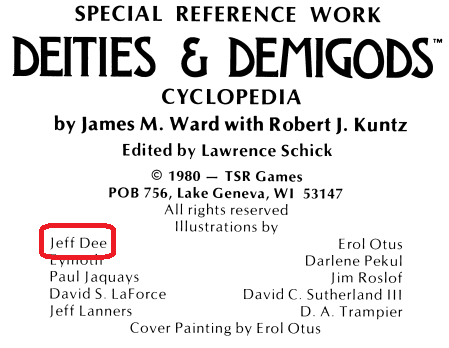
Also, although the Behemoth picture itself was drawn by Paul Jaquays, check out the name of the first illustrator credited on the title page.

Sunday, July 18, 2021

In the sync stream

Composing an email to a family member in America, I mentioned my persistent premonition that Something Big is about to happen and said that I could best sum it up by pinching a chapter title from Herman Melville: “Loomings.” Then I thought to myself that when I think Moby-Dick, I think “The Whiteness of the Whale” and I think “Loomings” — that those two chapter titles are among the novel’s most memorable features.

(While I was catching up on email, my wife was shopping online for fitted sheets. She kept forgetting, and asking me, the dimensions of our beds. “Our bed is six by seven, the guest bed is five by six,” I kept saying.)

I mentioned in my email that the government kept extending the birdemic restrictions by two weeks and two more weeks and two more weeks. This made me think of a line from Macbeth, and, abandoning the half-written email, I started link-surfing Wikipedia instead. I went from “Tomorrow and tomorrow  and tomorrow” to “Soliloquy” to “To be or not to be”  to “Cultural references to Hamlet” to “Roderick Alleyn” to “Gentleman detective” to “Gentleman thief” to “Carmen Sandiego.” (I probably could have skipped a few of those steps, since apparently there was a movie called Carmen Sandiego: To Steal or Not to Steal released last year.) The illustration accompanying this last article didn’t match my memory, so I ran an image search on carmen sandiego 1985, and that brought up a DOS game screenshot featuring the city of Moroni, Comoros.

Perfume, made from -- perfume plants!

Wondering what the building in the picture was, I searched for moroni comoros building. Apparently there’s only one building of note there, since every result was the Grand Mosque du Vendredi.


I thought it looked a bit like the Nauvoo Temple — which, it so happens, was the first Mormon temple to be topped with the figure of the angel Moroni.


I thought of how the angel Moroni was occupying the place that would traditionally be given to the cross, which made me think of the Coleridge line “instead of the cross, the albatross.” And this brought me back to Melville: Ishmael’s recollection of the first albatross he ever saw, which he repeatedly likens to an angelic being. “Its vast archangel wings, as if to embrace some holy ark” — “flew to join the wing-folding, the evoking, the adoring cherubim” — “as Abraham before the angels, I bowed myself.” This last is an allusion to the story of Sodom and Gomorrah.

Joseph Smith's golden plates are supposed to have been buried by Moroni in the Hill Cumorah, and various attempts have been made to connect these names with Moroni in the Comoros -- proposing either than Smith pinched the names from a world map (which in his day often called the country Camorah) or from the memoirs of Captain Cook, or that the Comoros were settled by Austronesian Nephites who brought the names with them. I have long wanted to write something about homosexuality and Mormonism, to be titled "Sodom and Cumorah," but so far I have nothing interesting to say on that subject and so, like the essay on Lehi's dream to be spooneristically titled "Rods and Mockers," it remains unwritten.

Looking up Ishmael's rhapsody on the albatross to make sure I had quoted it correctly (I had), I found that it comes from "The Whiteness of the Whale" -- Chapter 42 of Moby-Dick. That number seemed significant, and it took me a second to remember why.

Earlier in the day, before attempting to write an email while repeating bed measurements, I had taught on online English class. The text we were discussing included this sentence: "According to psychologists, children have to repeat certain tasks, like multiplication or division, over and over again until they can do them automatically." In the course of explaining it, I said, "So now if I say 'six times seven' you immediately think '42.' If I say 'seven times eight,' you don't even have to think; you immediately know it's 56." I realized that these two equations I had randomly chosen as examples mapped to the dimensions of the two beds: 42 is literally "six by seven," and 56 is in a different sense a five "by" (adjacent to) a six.

(Bed dimensions are also a link to the Cities of the Plain. If I remember correctly, an aggadah compiled in Louis Ginzberg's Legends of the Jews takes the story more normally associated with the name of Procrustes and relocates it to Sodom, saying that it was the men of Sodom who had the custom of placing strangers on a bed and making them fit it by either stretching or amputating their legs.)

Someone sent me a link to a page (in Chinese) about a local temple I might be interested in visiting. As I idly scrolled through photos of the place, I started thinking about a different Chinese temple we had visited a year or so ago. Outside the temple was a paved area in the shape of a large circle divided radially into what I at first took to be 56 segments, each labeled with I Ching terms. I found this to be interesting because of the potential Tarot connection, and I actually walked around the circumference of the thing counting the segments as I went: yes, 56. I found this puzzling -- shouldn't it be 64 for the 64 hexagrams? -- and tried to work out the system behind the labels. Finally, I ended up circumnavigating it again, more slowly, and counting all the segments once more, and this time I did indeed get 64. Apparently both my gestalt impression that it "looked like 56" and my initial miscount had simply been errors.

As I kept scrolling though temple photos, I found that one of them -- included without explanation and for no obvious reason -- was a photo of the number 560 chalked onto a stone surface.


Just before I posted this, my wife was watching Thor: Ragnarok on television, and the number 142 popped up a few times in obvious look-an-Easter-egg fashion. I didn't bother to look up what it might mean to the guys who made the movie, but I thought, "142 -- doesn't that mean something to me?" I couldn't put my finger on it, though, until I returned to this unfinished post and realized that 1 and 42 are the numbers of the two Moby-Dick chapters I mention in the first paragraph.

Why Moby-Dick should be on my mind is anyone's guess. I've only read the book once, and that was back in 2006. It made a big impression at the time, but I've sort of been afraid to reread it.

Tuesday, January 5, 2021

Joan and the ark

My first mention of Joan of Arc, which set off the present chain of synchronicities, was a reference to "biblical pun correction" in Unsong: "One of the characters mentions Joan of Arc and is 'corrected' by another: 'Jonah whale; Noah ark.'" That is, one of the characters deliberately "mishears" the name "Joan of Arc" as "Jonah ark."

The first mention of Jonah in Unsong is when a girl meets a rabbinical student in a bar and gets him to agree to kiss her if she knows something about the Bible that he doesn't. She then asks him, "How long did Joseph spend in the belly of the whale?" -- and he walks into the trap, replying "three days and three nights" without noticing that the question is about Joseph rather than Jonah.

The more usual form of this joke is "How many of each animal did Moses take on the ark?" And the punchline, more often than not, is, "None. Moses wasn't on the ark." But of course Moses was in an ark. Here is Exodus 2:3-6.

And when [the mother of Moses] could not longer hide him, she took for him an ark of bulrushes, and daubed it with slime and with pitch, and put the child therein; and she laid it in the flags by the river's brink.

And his sister [Miriam] stood afar off, to wit what would be done to him.

And the daughter of Pharaoh came down to wash herself at the river; and her maidens walked along by the river's side; and when she saw the ark among the flags, she sent her maid to fetch it.

And when she had opened it, she saw the child: and, behold, the babe wept. And she had compassion on him, and said, This is one of the Hebrews' children.

Ark -- flags -- maid -- remind you of anyone? Many of my recent posts about Joan have centered on her distinctive banner or flag, and I have even had occasion to write (without any thought of Moses), "The word flag, of course, can also refer to a lilioid flower." In fact, when the word flag occurs in the King James Bible, it always refers to a riverside plant, never to a banner.

Joan's flag bore the names Jhesus and Maria. While the intended referents were of course Jesus Christ and his mother, these are also the New Testament forms of the Old Testament names Joshua and Miriam, respectively. Joshua was Moses' lieutenant and successor; Miriam, his elder sister who watched over him while he was in the ark.

But the main biblical ark is the Ark of the Covenant, created under the direction of Moses. Like Joan's banner, it features God between two angelic beings. Here is Exodus 25:22.

And there I will meet with thee, and I will commune with thee from above the mercy seat, from between the two cherubims which are upon the ark of the testimony, of all things which I will give thee in commandment unto the children of Israel.

⁂ 

In the previous post, I mention my pleasure in discovering that Joan of Arc has had what is described as a "boat-shaped church" built to her name in Rouen (even though the church itself is an outrageous eyesore), because it recalls the joke about Joan of Ark being Noah's wife.

And then I realized that, if a boat-shaped church counts as an ark, "Jonah ark" isn't a mistake after all. Check out Chapters 8 and 9 of Moby-Dick. While the chapel Ishmael visits isn't technically "boat-shaped," it's certainly much more boat-like than your average house of worship. The pulpit is made to look like the prow of a ship, and is ascended by means of a rope ladder "like those used in mounting a ship from a boat at sea." The preacher begins by shouting out nautical commands to the congregants -- "Starboard gangway, there! side away to larboard -- larboard gangway to starboard! Midships! midships!" -- and then, addressing them as "shipmates," proceeds to deliver a sermon on -- Jonah.

While I was in the process of writing this post, and had already made the Moses-Joan connection, Frank Berger left a comment on my previous post: "Check out my comment from your June 17, 2019 post in which you linked a gallery of your sister's fine drawings. The gallery featured thirty drawings, yet I comment on only one . . ."

The one drawing he had commented on was, of course, the portrait of Joan of Arc.

As for myself, in the 2019 post referred to, I had selected two of my sister's drawings as my favorites: one of an unidentified young woman, and the other titled Moses in the Court of Pharaoh.

After writing all of the above, I suddenly had the idea that I should check Bible passages numbered 20:21 to see is they had any applicability to the year that has just begun. Remembering how my uncle William John had based his interpretation of 9/11 on Revelation 9:11, I thought I'd try Revelation 20:21 -- but there is no such verse. Psalm 20:21, then? No such verse. Genesis? No such verse. Exodus, then? Jackpot.

And the people stood afar off, and Moses drew near unto the thick darkness where God was.

You and me both, Moses.